


Choosing between embroidery and screen printing is one of the most practical decoration decisions a streetwear brand will make. The choice affects how your logo feels on the garment, how the artwork ages after washing, how the sample should be checked, how the production cost is built, and how easily the design can be repeated across hoodies, T-shirts, sweatpants, shorts and jackets.
There is no single best method for every collection. Embroidery gives a stitched, premium and textured look. Screen printing gives bold graphic coverage, strong color impact and better flexibility for large artwork. Many streetwear labels use both methods in the same product line, using embroidery for chest logos, sleeve details or patches and screen printing for front graphics, oversized back prints or drop-specific artwork.
This guide compares embroidery vs screen printing for streetwear brands from a production point of view, so you can brief your manufacturer clearly and make better decisions before sampling.
Quick Answer: Which Method Should You Choose?
Use embroidery when your design needs a premium stitched logo, small branding detail, varsity-style patch, 3D texture or long-lasting identity mark. It works well for hoodies, sweatshirts, jackets, caps, polos and heavier streetwear pieces where the garment can support the stitch density.
Use screen printing when your design needs bold color, large graphics, oversized front or back artwork, repeated production consistency or a softer result over a wide surface. It is especially useful for graphic T-shirts, hoodies, sweatpants, shorts and collection drops with strong visual artwork.
Use both when you want a richer product: for example, a screen printed back graphic with an embroidered chest logo, an applique embroidery patch over a washed hoodie, or a printed base graphic with stitched details on top.
Embroidery vs Screen Printing: Side-by-Side Comparison

| Factor | Embroidery | Screen Printing |
|---|---|---|
| Best for | Premium logos, patches, chest marks, sleeve details, varsity lettering | Bold graphics, large prints, repeat artwork, full front or back designs |
| Visual style | Stitched, textured, dimensional | Flat or raised ink, graphic, high impact |
| Hand feel | Raised thread surface | Depends on ink: soft, rubbery, puffed or high-density |
| Artwork fit | Simple logos, lettering, badges, shapes with clear borders | Solid graphics, typography, illustrations, large areas of color |
| Detail limits | Very tiny text and thin gradients can be difficult | Fine detail is possible, but color separations and ink layers matter |
| Cost logic | Affected by stitch count, size, complexity and placement | Affected by number of colors, print size, screens, ink type and quantity |
| Fabric fit | Strong on fleece, twill, denim, caps and structured panels | Strong on cotton, fleece, jersey, French terry and many streetwear fabrics |
| Production risk | Puckering, heavy hand feel, thread color mismatch, poor digitizing | Cracking, poor curing, color mismatch, thick hand feel, placement drift |
| Best streetwear use | Premium branding and texture | Main graphics and high-volume collection prints |
1. Why Decoration Choice Matters for Streetwear
Streetwear is built around identity. A blank hoodie can become a brand piece through the fit, fabric weight, wash, label package and decoration method. If the decoration feels cheap, too stiff, poorly placed or inconsistent after washing, the entire product feels weaker.
For brands, the decoration method also shapes the product story. Embroidery often feels more premium because customers can see thread, texture and dimension. Screen printing often feels more graphic and drop-driven because it can carry large artwork, bold lettering, slogans, character designs and oversized back prints.
That is why the right question is not only “Which is better?” The better question is: “Which method supports this artwork, fabric, price point, quantity and brand direction?”
If you are developing a full collection with a custom streetwear manufacturer, decide decoration methods early. Your manufacturer can then recommend the right fabric surface, garment construction, sampling route and quality checks before bulk production.
2. What Embroidery Means in Streetwear Production

Embroidery uses thread to stitch artwork directly into the garment or onto an applique/patch. For streetwear, embroidery is often used to make logos, letters and badges feel more physical and premium.
For detailed embroidery types, artwork limits and sample checks, see our streetwear embroidery guide.
Common embroidery styles include flat embroidery, 3D puff embroidery, applique embroidery, chenille embroidery, towel embroidery and distressed embroidery. Each style has a different structure. Flat embroidery is clean and versatile. 3D puff embroidery adds raised dimension. Chenille gives a soft varsity texture. Applique uses fabric pieces stitched onto the garment, which can create bold logos without filling the entire shape with thread.
Embroidery works best when the artwork is prepared correctly. The file usually needs digitizing, which turns the design into stitch instructions. This step matters because the same logo can look very different depending on stitch direction, density, thread type, border handling and underlay structure.
For streetwear brands, embroidery is usually a strong choice for:
- Chest logos and small identity marks
- Sleeve logos and cuff details
- Varsity letters and applique patches
- Premium zip hoodie branding
- Washed hoodies with textured details
- Caps, jackets and structured panels
If you are developing hoodies, embroidery should be checked together with fabric weight, wash effect, zipper placement, rib quality and shrinkage. A custom hoodie manufacturer can help test whether the stitch density is suitable for the chosen fleece or French terry.
3. What Screen Printing Means in Streetwear Production
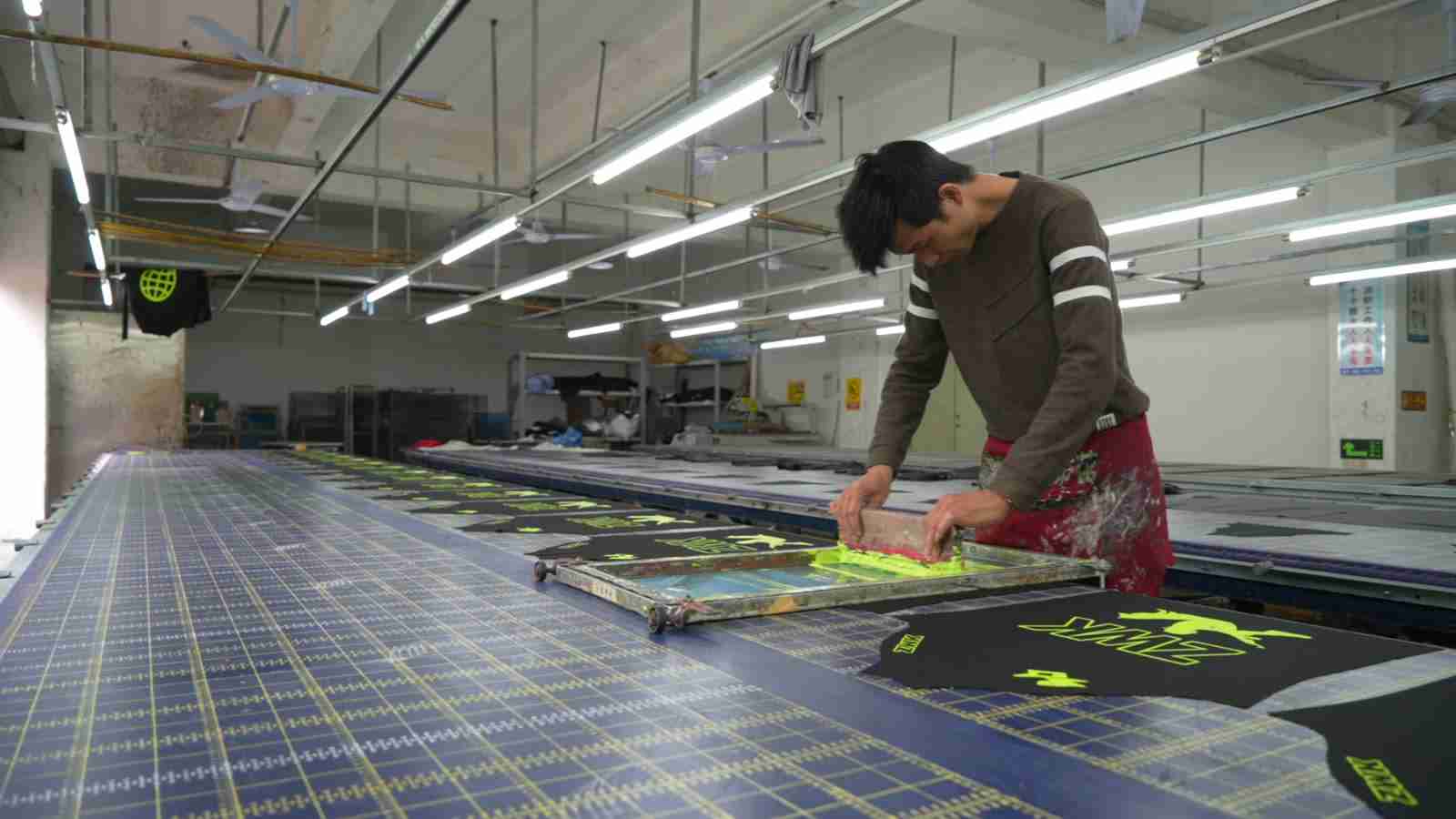
Screen printing pushes ink through a mesh screen onto garment panels or finished garments. It is one of the most common methods for streetwear because it supports bold graphics, strong color coverage and repeat production.
The screen printing result depends on the ink system, artwork separation, fabric, curing, placement and production handling. Water-based ink can create a softer feel on suitable cotton fabrics. Plastisol or rubber ink can deliver strong color and opacity. Puff ink can create a raised soft texture. High-density printing can build a sharper raised surface. Discharge printing can create a soft vintage result on suitable dyed cotton.
Screen printing is especially strong for:
- Graphic T-shirts
- Oversized hoodie back prints
- Large front logos
- Sleeve graphics
- Sweatpants and shorts prints
- Drop-specific artwork across multiple garments
For a deeper process page, see Eking Clothing’s screen printing for custom apparel guide. If your artwork needs raised texture rather than a flat print, also compare it with puff printing or a dedicated puff print hoodie manufacturer.
4. Artwork: What Works Better for Each Method?
Embroidery works best with clean shapes, clear outlines and artwork that can be translated into stitches. Simple logos, initials, patches, bold letters and icons are usually strong candidates. Very small text, thin outlines, gradients, photographic details and complicated shadows can become difficult because thread has physical thickness.
Screen printing works better for large artwork, strong typography, multi-panel graphics and designs with broad color areas. It can handle more visual complexity than embroidery, but the production team still needs to consider color count, halftones, ink layers and fabric color.
For embroidery, ask for a stitch preview or digitizing proof before sample production. For screen printing, ask how the artwork will be separated, what ink type will be used, and whether the design needs a strike-off before garment sampling.
If your streetwear artwork includes both a small logo and a large graphic, do not force one method to do everything. Use embroidery for the small identity mark and screen printing for the graphic artwork. The product will usually feel more intentional.
5. Fabric and Garment Compatibility
Fabric choice can make or break the decoration result. Heavy fleece, French terry, twill, denim and structured panels usually support embroidery better than thin, unstable fabrics. If the fabric is too lightweight, dense embroidery may cause puckering, pulling or an uncomfortable inside surface.
Screen printing needs a stable surface and proper ink selection. Cotton jersey, cotton fleece, French terry and many blended fabrics can work well, but the ink system must match the fabric. A thick ink layer on a lightweight T-shirt may feel heavy. A soft water-based print may look different on dark fabric than on light fabric. A raised print may behave differently after washing if the curing is not controlled.
For washed streetwear, test decoration after garment wash. Embroidery, applique and screen printing can all change after enzyme wash, acid wash, pigment wash or heavy distressing. The sample should represent the real production order, not only a clean blank garment.
6. Cost, MOQ and Production Planning
Embroidery cost is usually influenced by artwork size, stitch count, number of placements, thread colors, backing requirements and complexity. A small chest logo may be cost-effective, while a large fully filled embroidered back graphic can become heavy and expensive.
Screen printing cost is usually influenced by artwork size, number of colors, screens, ink type, setup time and order quantity. A one-color front print can be efficient for repeated production. A large multi-color graphic with special ink requires more setup and sampling.
MOQ depends on the garment type, fabric, artwork, trims, decoration process and supplier workflow. For startups, the safest approach is to confirm decoration before asking for a final quote. If you only send a logo and ask for a price, the quote may change later when the manufacturer sees the real artwork size, color count or stitch complexity.
When you request a quote, send:
- Vector artwork or high-resolution artwork
- Placement mockups with size in centimeters or inches
- Garment type, fabric weight and color
- Quantity by size and color
- Decoration method preference
- Reference photos for texture and hand feel
- Target sampling deadline and bulk timeline
7. Durability and Wash Performance
Both embroidery and screen printing can be durable when produced correctly. The failure points are different.
Embroidery problems often come from poor digitizing, thread tension, unstable fabric, loose thread trimming, poor backing or unsuitable stitch density. If the stitch is too dense, the logo may feel hard and the fabric may pucker. If the stitch is too loose, edges may look rough.
Screen printing problems often come from poor curing, wrong ink choice, too much ink, weak adhesion, color bleeding or poor washing compatibility. A print that looks good before washing can crack or fade faster if curing is not controlled.
For bulk production, ask your manufacturer how they check wash resistance, rubbing, placement, color consistency and finished garment appearance. For higher-risk projects, approve a pre-production sample before full bulk production.
8. Comfort and Hand Feel
Comfort matters because streetwear is worn repeatedly. A heavy embroidered patch on the wrong fabric can feel stiff. A large thick print can reduce breathability. A poorly placed inside backing can irritate the skin.
Embroidery usually creates more texture and weight. This is part of its appeal, but it should be used with intention. A small logo or patch can feel premium. A large dense embroidery across the back may look impressive but feel heavy.
Screen printing can be softer or heavier depending on ink. Water-based and discharge prints can feel softer on suitable fabric. Plastisol, rubber ink, puff and high-density effects can feel more dimensional but may be thicker.
When comparing samples, do not only look at the front. Touch the print, stretch the garment gently, check the inside surface, wash the sample and review how it feels after drying.
9. Best Method by Streetwear Product Type
For T-shirts, screen printing is usually the stronger option for large graphics, front prints, back prints and drop artwork. Embroidery can still work for small chest logos, hem details or premium capsules, but large embroidery on lightweight T-shirts should be tested carefully.
For hoodies and sweatshirts, both methods are useful. Screen printing works well for front and back graphics. Embroidery works well for chest logos, applique letters, sleeve marks and premium branding. Many brands combine both methods on one hoodie.
For sweatpants and shorts, screen printing is practical for leg graphics and logo placements. Embroidery is useful for small logos, pocket details or premium marks, but placement should be tested for comfort and stretch.
For jackets and caps, embroidery often feels more premium because the fabric is structured. Screen printing can still be used on certain panels, but construction, seams and surface texture matter.
10. When to Combine Embroidery and Screen Printing
Some of the best streetwear pieces combine decoration methods. A hoodie might use a screen printed back graphic, a small embroidered chest logo and a woven label package. A varsity-inspired sweatshirt might use applique embroidery for the main lettering and screen printing for a distressed background graphic.
Combining methods works best when each method has a clear role. Avoid adding techniques only to make a product look more expensive. The decoration should support the brand story, not overload the garment.
Good combinations include:
- Screen printed back graphic plus embroidered chest logo
- Applique embroidery plus small printed slogan
- Puff screen print plus woven label and sleeve embroidery
- Washed hoodie with distressed embroidery and tonal print
- Graphic T-shirt with small embroidered hem detail
If you plan to combine techniques, tell your manufacturer early. The production sequence matters. Printing, washing, embroidery, applique, labels and final pressing may need to happen in a specific order.
11. Sampling Checklist Before Bulk Production
Before approving embroidery or screen printing for bulk production, check the sample carefully. Many decoration issues are easy to fix at sample stage and expensive to fix after bulk production starts.
Use this checklist:
- Is the artwork size correct?
- Is the placement correct on each garment size?
- Does the thread or ink color match the approved reference?
- Does the logo look clean from normal viewing distance?
- Does the hand feel match the brand expectation?
- Is the inside surface comfortable?
- Does the decoration survive washing as expected?
- Are edges, corners, small text and outlines clean?
- Does the decoration still look good after garment wash or finishing?
- Is the result repeatable for bulk quantity?
For multi-size production, confirm whether placement should scale or stay fixed. A chest logo that looks right on size M may feel too high or too low on larger sizes if the grading and placement rules are not clear.
12. Common Mistakes to Avoid
The first mistake is choosing the method only by price. A cheaper method that weakens the product can hurt brand perception. The second mistake is sending low-resolution artwork and expecting perfect production. The third mistake is approving a sample without washing it.
Another common mistake is forcing embroidery to reproduce artwork that should be printed. If the design has gradients, tiny details or large solid areas, screen printing or another print method may be better. The opposite is also true: if the design is a small premium logo, embroidery may look more valuable than a flat print.
Finally, avoid comparing methods without considering the actual garment. The same artwork can behave differently on heavyweight fleece, lightweight jersey, pigment-washed cotton, ribbed fabric or nylon.
13. How to Brief Your Manufacturer
A strong brief saves time and reduces sample revisions. Instead of asking “Can you do this logo?” send a complete decoration brief.
Include the artwork file, garment mockup, placement size, fabric idea, preferred decoration method, reference photos, quantity, colorways and target price level. If you are not sure whether embroidery or screen printing is better, say that clearly and ask for a production recommendation.
At Eking Clothing, decoration planning is normally reviewed together with fabric, fit, wash, trims, labels and packaging. That helps brands avoid treating decoration as a separate final step. For streetwear, the decoration method is part of the product design.
FAQ
Is embroidery better than screen printing for streetwear?
Embroidery is better for premium logos, patches, textured details and smaller brand marks. Screen printing is better for large graphics, bold artwork and repeat collection prints. The better choice depends on the artwork, garment, fabric and target price point.
Which lasts longer, embroidery or screen printing?
Both can last well when produced correctly. Embroidery durability depends on digitizing, stitch density, thread quality and fabric stability. Screen printing durability depends on ink choice, curing, fabric compatibility and washing conditions.
Is embroidery more expensive than screen printing?
Embroidery can be more expensive for large or dense designs because cost is affected by stitch count and production time. Screen printing can be more cost-effective for repeated graphic production, but multi-color artwork, special inks and small quantities can increase cost.
Can I use embroidery on T-shirts?
Yes, but the design should usually be small and the fabric should be stable enough. Lightweight T-shirts may pucker if the embroidery is too dense. For large T-shirt artwork, screen printing is often more suitable.
Can screen printing be used on hoodies?
Yes. Screen printing is widely used on hoodies for front logos, oversized back graphics, sleeve prints and drop artwork. The ink type, print size, fabric and curing process should be tested before bulk production.
Can I combine embroidery and screen printing on one garment?
Yes. Many streetwear brands combine both methods, such as an embroidered chest logo with a screen printed back graphic. The key is to plan production sequence, placement and wash testing before bulk production.
Final Thoughts
Embroidery vs screen printing is not a simple winner-takes-all decision. Embroidery gives streetwear pieces a premium stitched identity. Screen printing gives brands bold graphics, strong repeatability and flexible artwork coverage. The best choice depends on the design role, fabric, order quantity, hand feel, wash effect and brand positioning.
If you are developing a new streetwear collection and want help choosing the right decoration method, Eking Clothing can review your artwork, garment type, fabric idea and quantity before sampling. Contact us to discuss embroidery, screen printing or combined decoration for your next custom apparel project.

