

Ordering clothing for a group looks simple until the details start to multiply. Different roles need different garments. Sizes must be collected accurately. Logos may change by department, and every piece still needs to feel like part of one visual system.
A clear order plan keeps those decisions organized before sampling and production begin. It also makes future reorders easier because the approved garments, artwork, placements and packing instructions are recorded instead of rebuilt from memory.
This guide explains how to plan custom team apparel and ordinary branded workwear for clubs, events, hospitality teams, retail staff, creative crews and other organizations that need coordinated clothing in volume.
Start With the People and Roles
Begin with the people who will actually wear the clothing. A front-of-house team, warehouse crew, event staff and management group may represent the same company, but they do not necessarily need the same item.
Create a simple role list before choosing products:
- Who will wear each garment?
- Will it be used indoors, outdoors or in both environments?
- Is the clothing for daily work, an event, travel or occasional promotion?
- Does the wearer need a name, number, department or job title?
- Will new employees or team members need the same garment later?
This step separates visual preferences from practical requirements. For example, an event team may want lightweight T-shirts that are easy to identify at a distance, while customer-facing staff may need polos or overshirts with a cleaner presentation. A creative crew may prefer relaxed silhouettes, while a service team may prioritize easy care and consistent sizing.
If the main goal is a coordinated club, event or sports-inspired collection, review Eking’s custom team apparel manufacturing service. For company staff clothing and day-to-day branded garments, the branded workwear service provides the more relevant starting point.
Choose Garments by Use and Season
Once the roles are clear, build a small garment system instead of selecting isolated pieces. Most groups need a core item plus one or two layers that work across different temperatures and situations.
Common options include:
- T-shirts for events, warm environments and everyday team use
- Polo shirts for customer-facing teams and more structured presentation
- Sweatshirts and hoodies for casual uniforms, travel and cooler conditions
- Overshirts or lightweight jackets for layering and staff identification
- Coordinated bottoms when a complete uniform set is required
Fabric weight, stretch, breathability and hand feel should match the actual use. A heavier fabric may create a more substantial silhouette, while a lighter fabric can be more comfortable for active or warm-weather work. Color should also be considered at the fabric stage because the same brand color can look different on cotton, polyester blends and textured materials.
Keep the first range focused. Too many garment types make size collection, artwork placement and stock control harder. A clear core set is usually easier to approve, distribute and reorder.
Build a Shared Brand System
Team clothing works best when every item belongs to the same brand system, even when garment colors or roles differ. Define the system before approving individual mockups.
The brand system should specify:
- Primary and secondary garment colors
- Approved logo versions for light and dark backgrounds
- Standard chest, sleeve and back placements
- Department, role, name or number rules
- Typeface and capitalization rules for personalized text
- Maximum artwork dimensions for each garment type
A single logo does not need to appear at the same size on every item. A polo chest logo may be compact, while an event T-shirt can carry a larger back graphic. The important point is consistency: the scale, spacing, colors and hierarchy should feel intentional across the complete order.
Send vector artwork whenever possible and identify the colors that must remain exact. If artwork is only available as a low-resolution image, allow time for file preparation before the sample stage.
Plan Sizes and Personalization
Size errors create avoidable delays and leftover garments. Use the manufacturer’s measurement chart for the selected style rather than relying only on familiar labels such as small, medium or large. Two garments with the same size label can fit differently because of their cut, fabric or intended silhouette.
For a mixed group, an order sheet can include:
- Wearer or department name
- Garment style and color
- Selected size
- Quantity
- Printed or embroidered name
- Number or role identifier
- Packing group
When fit is important, review a sample or a small size set before collecting the final quantities. Ask wearers to compare garment measurements, not just the size printed on a label.
Personalization should be separated from the shared artwork in the order file. This makes it easier to confirm that every name, number and department is spelled correctly and connected to the right size.
Confirm Decoration and Sample Standards
The best decoration method depends on the artwork, fabric, quantity and desired finish. Screen printing can suit repeat graphics and larger production runs. Heat-transfer options can support detailed artwork or names and numbers. Embroidery can provide a structured logo finish on polos, overshirts, jackets and caps.
Eking’s customization technology overview shows the available decoration routes and helps buyers compare the visible result before sampling.
The sample review should cover more than the artwork itself. Check:
- Garment measurements and fit
- Fabric color and hand feel
- Logo size and exact position
- Decoration color and edge quality
- Personalized text format
- Labels, folding and packing instructions
Record approved measurements and placements in writing. Photographs are useful references, but a production file should also state the distance from a seam, neckline or garment edge so the placement can be reproduced consistently.

Organize Bulk Production and Packing
After the sample is approved, the bulk order should follow one controlled specification. Changes made after production starts can affect artwork preparation, material allocation and packing, so the final order sheet should be checked carefully before release.
The Eking manufacturing process explains how an approved project moves from preparation through production and quality checks.
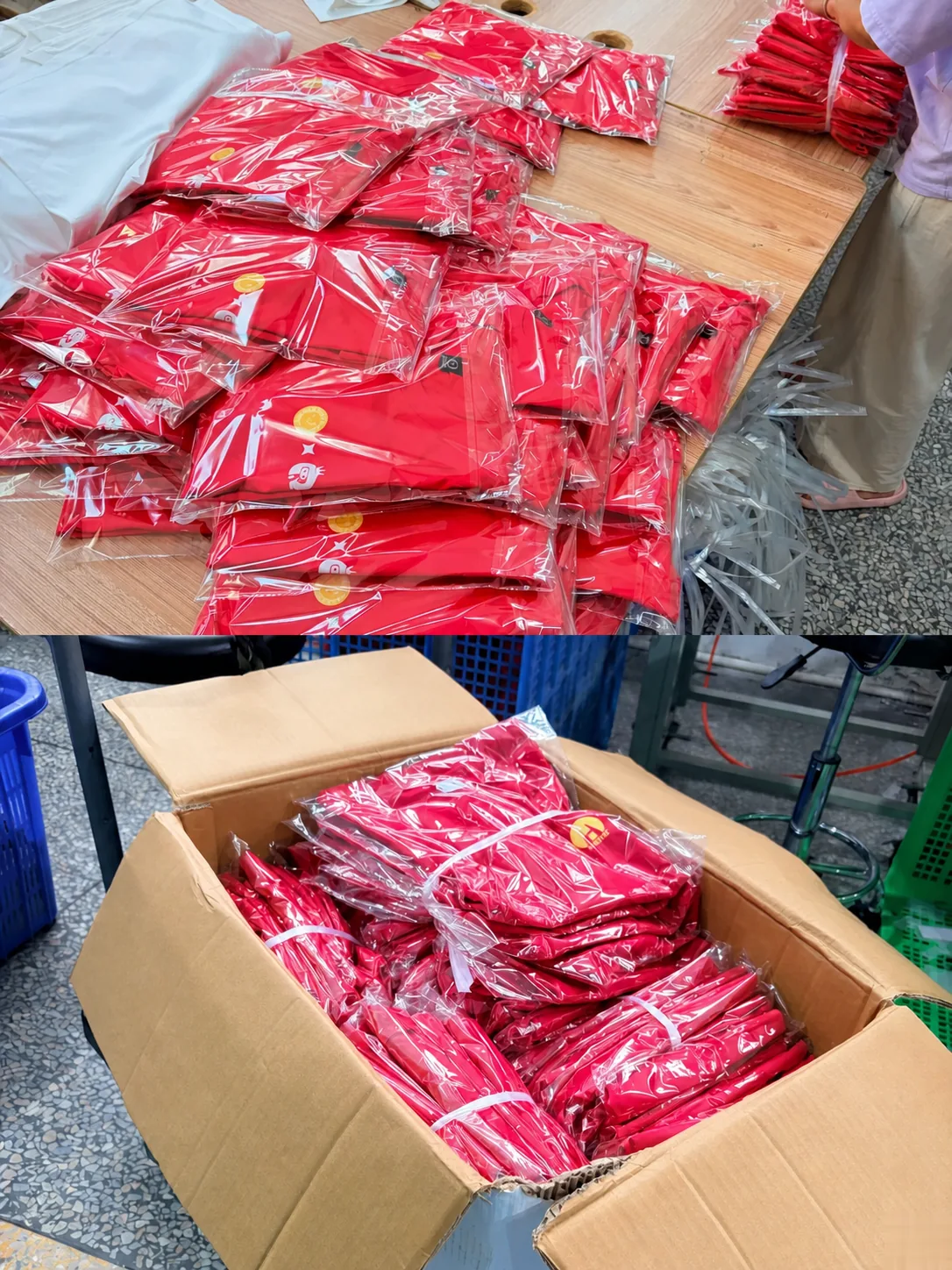
Packing instructions are especially useful for organizations distributing clothing to several locations or departments. Garments can be grouped by wearer, size, department, event or destination. Clear labels on cartons or inner packs reduce sorting work after delivery.
Before production, decide whether the order needs:
- Individual or grouped packing
- Size stickers or department labels
- A packing list by carton
- Separate sets for different locations
- Spare pieces kept as shared stock
These details should be included in the order file rather than added at the end of production.
Prepare for Repeat Orders
Team apparel and workwear often need to be reordered when staff change, a new season begins or another event is scheduled. Reorders are easier when the original specifications are complete.
Keep a record of:
- Garment style, fabric, color and measurements
- Approved artwork files and color references
- Decoration method, dimensions and placement
- Label and packaging specifications
- Size and personalization spreadsheet format
- Photographs of the approved sample and finished order
If the original garment or fabric changes, compare a new sample with the saved specification before repeating the order. This helps maintain a consistent appearance even when production takes place at a later date.
What to Send for a Quote
A useful inquiry gives the manufacturer enough information to recommend the right route without guessing. Prepare the following details:
- The type of organization and how the clothing will be used
- Required garment styles, colors and estimated quantities
- Size range and whether individual personalization is needed
- Logo or artwork files, preferably in vector format
- Preferred decoration method, if already decided
- Reference photos for fit, finish or placement
- Packing groups and delivery destination
- The date the clothing is needed, so production feasibility can be reviewed
If some details are not final, mark them clearly. A supplier can then separate confirmed requirements from options that still need recommendations or sampling.
Frequently Asked Questions
Can one order include different garments for different departments?
Yes. A coordinated order can include T-shirts, polos, sweatshirts, hoodies or lightweight layers, with shared colors and logo rules. The order sheet should clearly separate each garment, size range, artwork placement and packing group.
Should team apparel and staff workwear use the same design?
They can share a visual system without being identical. Customer-facing staff may need a restrained chest logo, while event or team garments may use larger graphics, names or numbers. Consistent colors and artwork rules keep the range connected.
How should we collect sizes from a large group?
Use the measurement chart for the chosen garment and collect each wearer’s selection in one structured spreadsheet. For fit-sensitive projects, approve a sample or size set before finalizing the quantities.
Can names, numbers and departments be added?
Personalized details can be planned alongside the shared artwork. Keep them in separate columns in the order sheet and verify spelling, capitalization, size and placement before approval.
What should be checked on the sample?
Check fit, measurements, fabric, garment color, logo size, placement, decoration finish, personalized details, labels and packing. Record the approved result so bulk production and later reorders can follow the same specification.
Plan Your Next Group Clothing Order
A well-prepared order gives every person the right garment while keeping the overall range consistent. Start with roles and use, narrow the garment selection, confirm the brand system, collect accurate sizes and record the approved sample details.
Explore the dedicated pages for custom team apparel and ordinary branded workwear, or send your project details to Eking for a production review.
