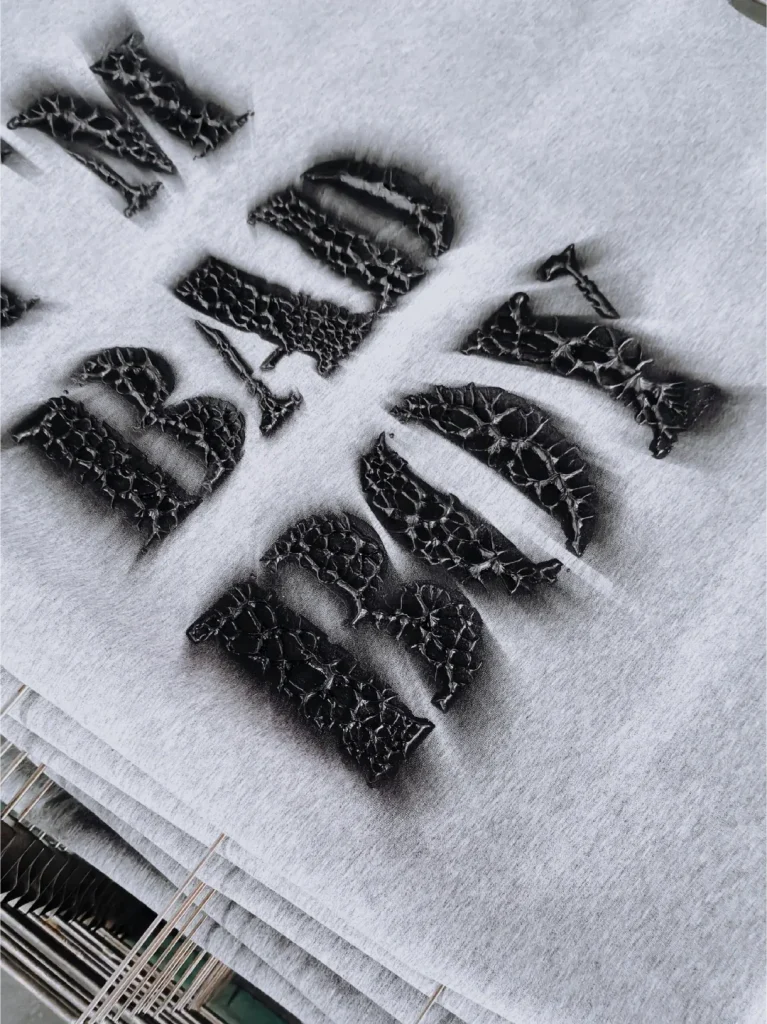
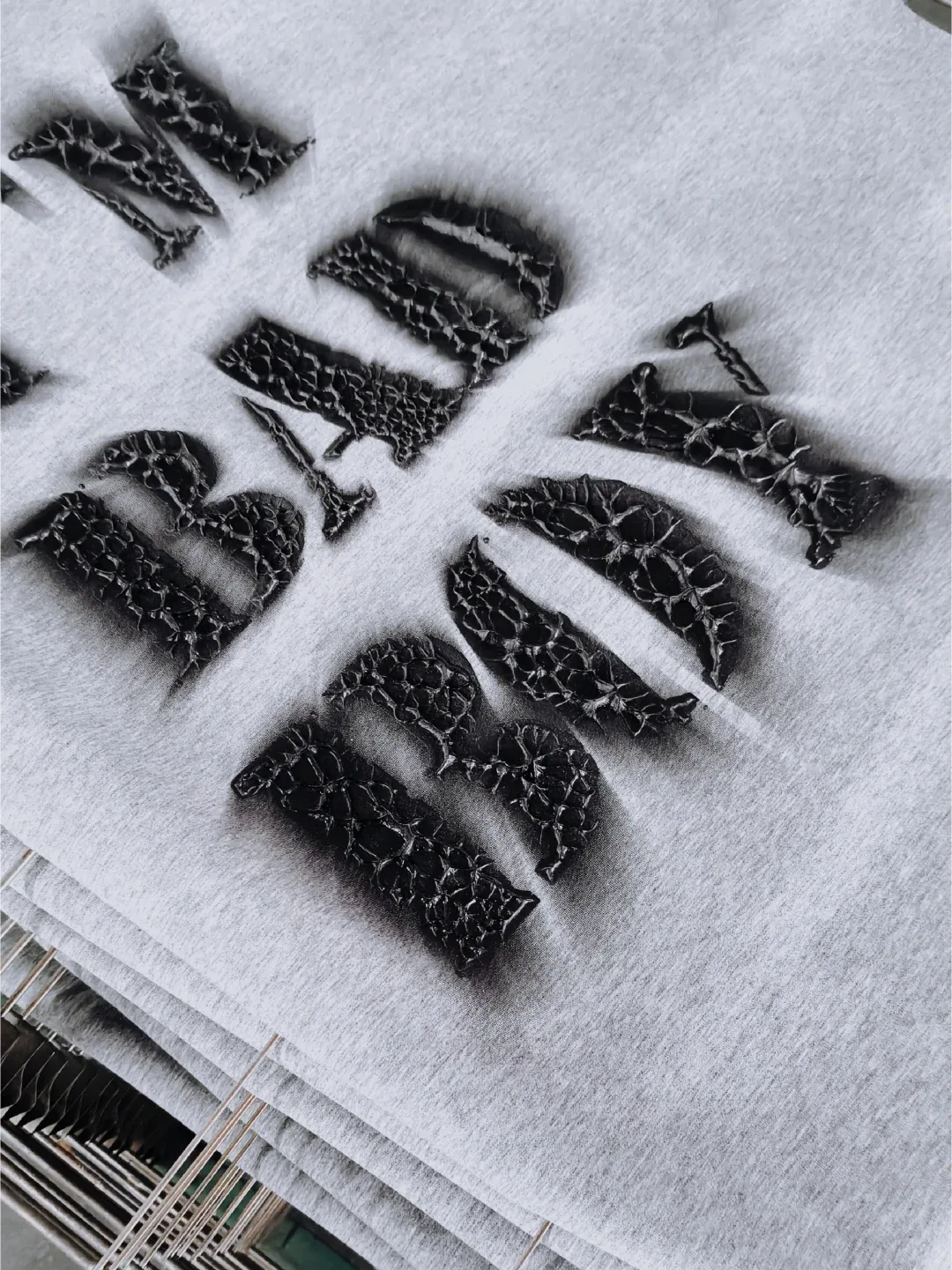
Rock texture printing gives a clothing graphic an uneven, raised surface that resembles cracked stone. Instead of relying only on a flat distressed image, the finish uses physical relief to change how the lettering or motif catches the light. For a streetwear brand, the result is a tactile design choice that needs to be approved on fabric, not just on a screen.
The five photos below show black, rock-texture lettering on light gray fabric. Use them to discuss the surface you want, then confirm the print method, fabric compatibility and care requirements through a physical sample.
Planning a raised logo for a clothing collection? Send your artwork, texture reference and garment brief to discuss the proposed finish and sample requirements.
What Makes This a Rock-Texture Print?
In these examples, the letter shapes have a coarse surface, raised sections and an irregular network of fissures. Light catches the ridges while the gaps and shadows define the broken-up appearance. The effect is different from simply printing a photograph of stone onto a smooth surface.
Look at the graphic from more than one angle. A front-facing photo can explain the overall layout, while an oblique close-up reveals the height and edges more clearly. Neither view establishes the exact ink chemistry or proves how the finish will behave after washing.
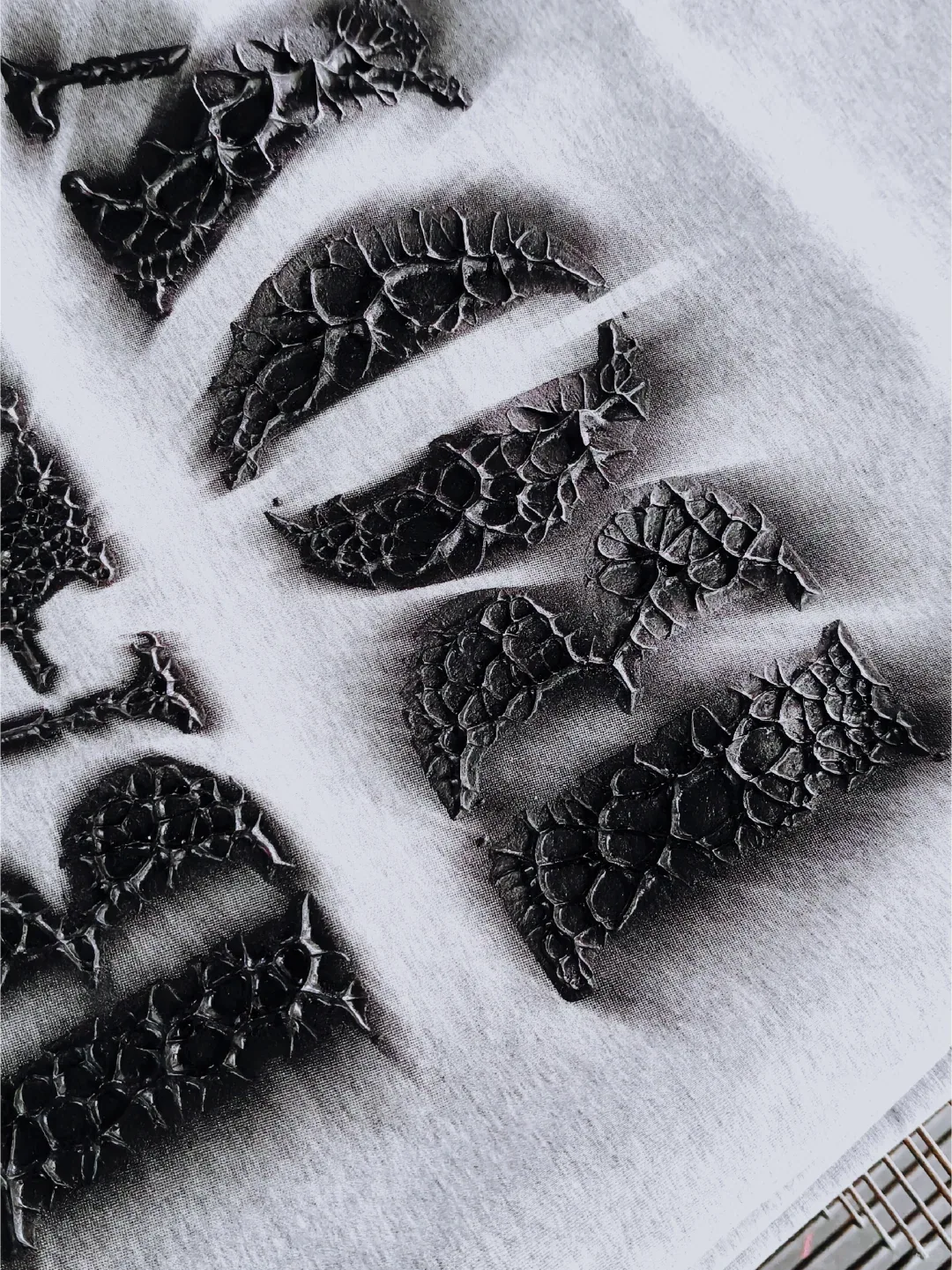
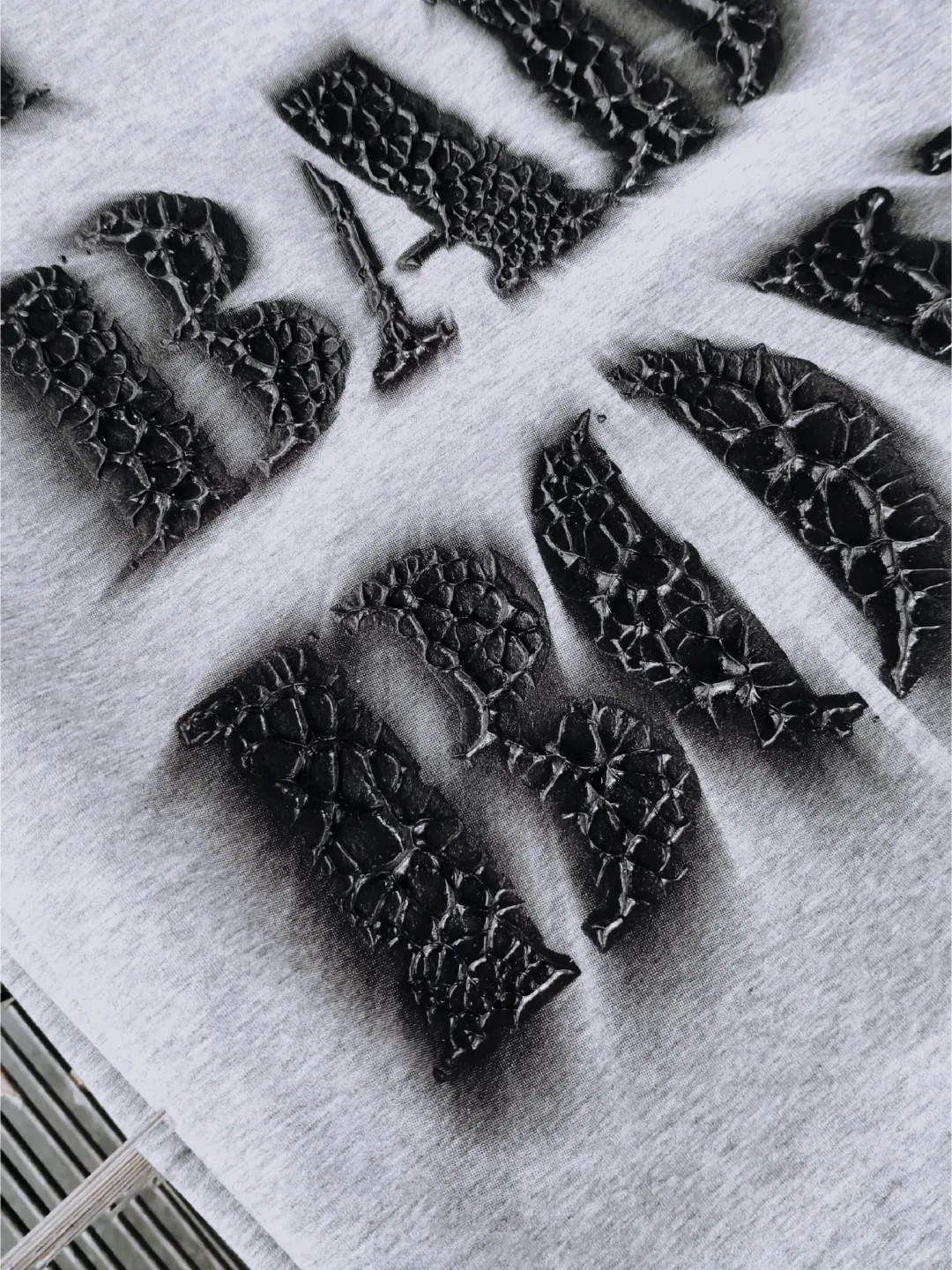
Rock Texture, Crackle Print and Flat Distressed Artwork
These descriptions can overlap, but they are not a complete production specification. A brand asking for “cracked printing” may mean a distressed drawing, an intentionally cracked ink surface or a thicker stone-like relief. Show a reference and state which feature matters most.
| Finish | Design goal | Sample question |
|---|---|---|
| Raised rock-texture print | An irregular, stone-like surface with visible relief | Do the height, roughness and fissure scale match the reference? |
| Intentional crackle print | A deliberately broken-up printed surface | Are the cracks part of the approved effect, with acceptable attachment after care testing? |
| Flat distressed artwork | A worn-looking graphic created through gaps in the artwork | Does the printed image reproduce the planned distress without requiring a raised finish? |
Specialty ink suppliers also distinguish between effects. For example, Avient lists Rock Base and Brittle Inks as separate resources. This helps explain why a visual brief is more useful than a vague process name; it does not identify the ink used in these photos.
For a wider comparison of decoration options, see our guide to custom garment printing methods.
Plan the Artwork Around the Texture
Bold lettering and open shapes make the surface easier to see. Before sampling, mark the finished graphic width and height, the placement and the smallest gaps that must remain readable. Use a dimensioned reference such as the T-shirt print placement guide rather than judging position from a photograph. Narrow letter counters and fine outlines need particular attention because a coarse finish can change their appearance.
Separate the overall artwork from the surface reference. Supply an editable logo or graphic when available, plus a close-up showing the preferred relief and crack scale. State whether the texture should cover the whole shape or only selected areas.
If your design combines this finish with another decoration, show the boundaries and intended sequence on the decoration page of your clothing tech pack. Avoid treating a phone photo as a dimensioned production file.
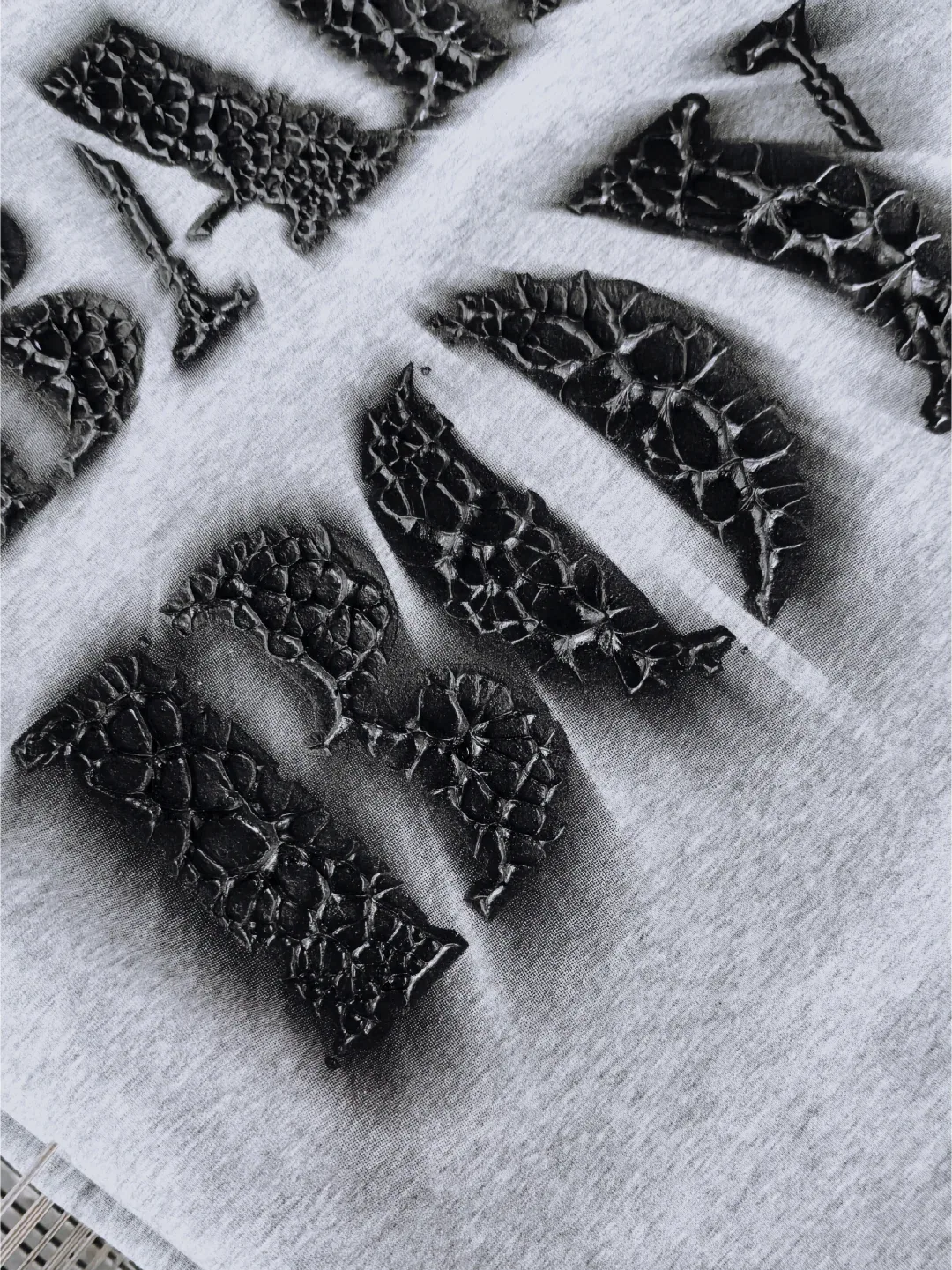
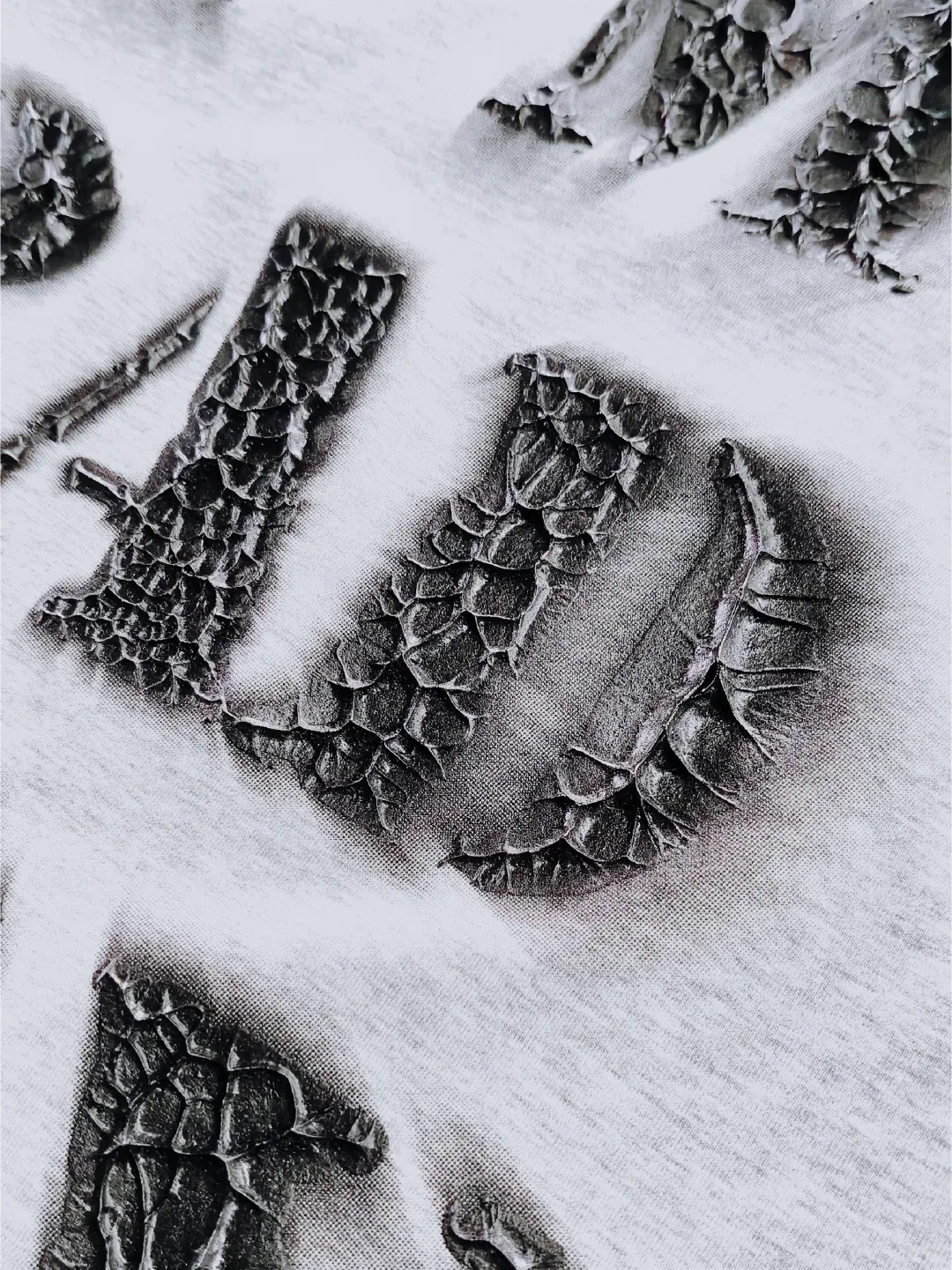
Choose the Garment Before Approving the Print
A raised finish should be sampled on the intended production fabric. Fabric structure, stretch, surface finish and the size of the printed area can influence the result and the feel of the decorated garment. A sample on one gray swatch does not automatically approve every fabric or garment color.
Tell the printer whether the design will sit on a chest, sleeve, back or another area that bends or stretches during wear. A large solid graphic also needs a hand-feel review: the visual effect may be right while the decorated area feels too firm for the garment.
For a hoodie project, review the decoration alongside fit and construction in the custom hoodie sampling process. Print parameters should follow the chosen ink system and the printer’s validated process, not a generic temperature copied from another finish.
Rock Texture Printing: Sample Approval Checklist
- Overall shape: Confirm graphic dimensions, placement, readable letters and open gaps.
- Surface character: Approve the height, crack scale and degree of irregularity from front and angled views.
- Fabric and feel: Check the garment relaxed and in normal use, including stiffness and distortion around the decoration.
- Attachment: Distinguish the intended surface cracks from unwanted lifting, loose fragments or peeling at the edges.
- Care evaluation: Agree on the intended washing and drying conditions, then review a tested sample against the approved reference.
- Bulk variation: Document an acceptable range of texture rather than assuming every small fissure will repeat in exactly the same position.
Keep the approved physical sample and written comments as the production reference. Photographs record appearance, but they cannot replace checking touch, attachment and behavior after the intended care process.
Rock Texture Printing FAQs
Are Cracks in the Print a Defect?
Not necessarily. The cracks may be intentional in a rock-texture or crackle finish. The distinction is whether the result matches the approved sample and meets the agreed attachment and care requirements. Unwanted peeling should not be excused as part of the design.
Is Rock Texture Printing the Same as Stone Washing?
No. This article describes a localized printed decoration. A stone-wash appearance concerns the garment or fabric finish. Specify each effect separately if the design needs both.
Can the Same Effect Be Used on Every Fabric?
Do not assume so. Send the actual fabric and garment information for review, especially when the placement stretches during wear. Confirm the result with a sample before applying it to a new material.
How Many Washes Will It Last?
These photos do not establish a wash-life rating. Ask for testing on the proposed ink-and-fabric combination under the intended care conditions, with acceptance criteria agreed in advance.
Develop a Rock-Texture Print for Your Collection
Send Eking Clothing your artwork, a texture reference, graphic dimensions, garment fabric, placement and order quantity. Include your target delivery date so the proposed decoration and sample requirements can be reviewed together.