A useful streetwear production timeline is not a countdown that starts when a purchase order is sent. It is a chain of connected decisions. The fabric must support the intended fit, the sample must translate the specification, and the approved standard must be clear before bulk work can proceed. When one decision remains open, the next team may have to wait.

This guide helps brand owners plan those handoffs from the first product brief to shipment handoff. Newer teams can also use this streetwear production guide for startups to prepare for an initial factory discussion.
What a Realistic Streetwear Production Timeline Includes
A realistic plan covers development as well as bulk manufacturing. It records who must supply information, what the factory must prepare, and which approval releases the next stage. It also leaves room for review, correction, material movement, inspection and shipping coordination.
Timing depends on product complexity, material availability, decoration methods, sample revision needs, order details and production scheduling. It is therefore project-specific. A heavyweight washed hoodie with custom rib, embroidery and branded packing has different dependencies from a standard jersey T-shirt with one print. The practical goal is not to force both into one calendar. It is to identify the critical decisions early and update the schedule when an assumption changes.
Stage 1: Product Brief and Tech Pack Readiness
The brand should first define the style, intended fit, size range, colourways, target quantity, fabric direction, artwork, decoration and destination. A factory can discuss feasibility with an incomplete brief, but unclear inputs make any schedule provisional. Use a controlled document version so comments from different messages do not become competing instructions.
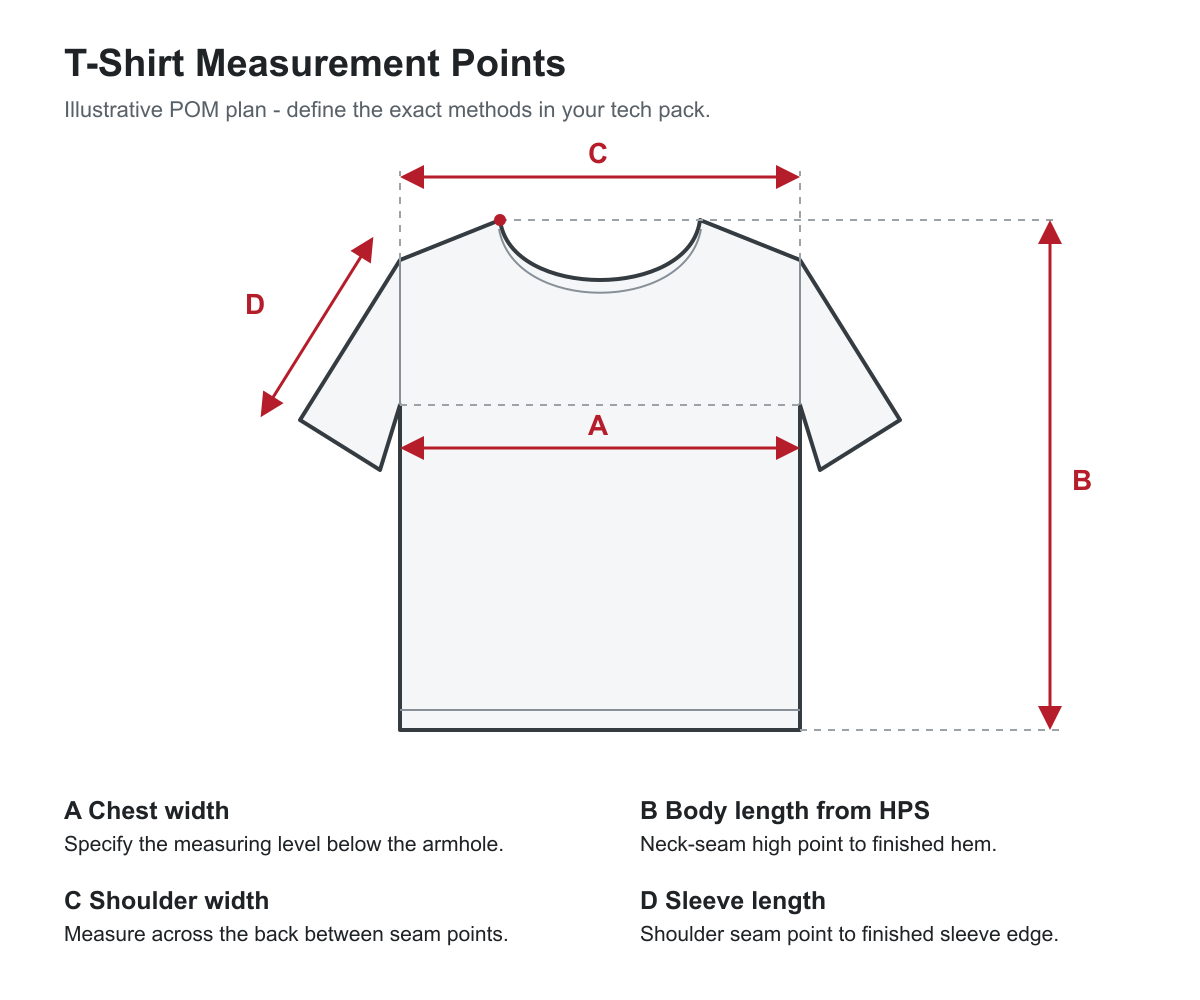
A production-ready file should communicate construction and measurements without turning this timeline guide into a component tutorial. The detailed process is covered in the clothing tech pack preparation guide. For hoodies, follow a consistent hoodie measurement method for manufacturing so body length, width, sleeve and hood references are understood in the same way.
The gate for Stage 1 is a brief that the factory can interpret and question. Reduce waiting by naming one brand decision-maker, sending editable artwork, identifying unresolved items, and replying to technical questions in one consolidated update.
Stage 2: Fabric, Colour and Trim Approval
Next, the brand provides its preferred fibre content, weight, handle, stretch, finish and colour references. It should also identify functional and branded trims such as rib, zips, drawcords, snaps, woven labels and hangtags. Physical references are useful when a written description could be interpreted several ways.
The factory checks sourcing options, compatibility and availability, then presents suitable swatches or trim samples. Colour and fabric should be reviewed in the context of the garment and decoration, because a print or embroidery result can change across surfaces. The approval gate is a recorded material and trim selection. Delays often begin when a preferred fabric is unavailable, a custom colour has not been confirmed, or trims are treated as a decision for later.
Stage 3: Pattern Development and Sampling
With the brief and material direction clear, the factory translates measurements and construction notes into a pattern and sample. This stage tests whether the proposed details can be made together: silhouette, seam positions, pocket access, hood shape, rib tension and artwork placement all interact on the physical garment.
The brand’s job is to remain available for questions and avoid introducing unrelated design changes while the sample is being made. If a new feature is necessary, record it as a revision and acknowledge that dependent pattern, material or decoration work may need to be repeated. The stage is complete when the sample is ready for a structured review, not simply when a parcel arrives.
To reduce preventable stops, confirm the sample size, shipping details and required artwork files before development begins. Make sure the factory knows which details are fixed and which are still being evaluated.
Stage 4: Sample Review and Revision Approval
Review the sample against the current specification, not memory or isolated photographs. Check measurements, fit, construction, material, colour, decoration scale and placement, labels, and relevant wash behaviour. Gather comments from design, product and commercial stakeholders before sending feedback.
One marked document is more actionable than scattered messages. Separate required corrections from preferences, include measurements or annotated images where needed, and identify anything approved without change. The factory then evaluates the comments, updates the pattern or process, and confirms whether another sample is required.
This approval is the bridge into production. The sample versus bulk production guide explains the different purposes of those stages in more detail. For timeline planning, the key point is that approval speed and the scope of each sample revision affect every dependent booking. Release bulk preparation only when the approved standard and agreed tolerances are documented.
Stage 5: Bulk Material Booking and Pre-Production Checks
After sample approval, the brand confirms the order details that drive bulk requirements: style and colour quantities, size breakdown, final labels, packing instructions and delivery destination. Bulk material booking and production release should follow the agreed purchase order, deposit or other documented commercial release. The factory can then calculate material needs, place project-specific bookings and align the production sequence.
Before cutting, both sides should verify that the production files match the approval. This may include the final pattern version, fabric and trim references, decoration artwork, placement, label orientation, folding method and carton information. A pre-production check is valuable because a correct sample does not protect the order if the bulk team receives an older file.
The release gate is written confirmation that the materials, instructions and commercial release are ready for bulk use. Any earlier reservation of long-lead material should happen only with explicit authorization as an at-risk commitment, because a later sample, design or quantity change may leave that material unsuitable for the order. Late size-ratio changes, unfinished label artwork or a changed colour can reopen purchasing and planning, so freeze these inputs before the factory commits dependent operations.
Stage 6: Cutting, Sewing and Decoration
Bulk execution normally moves through material inspection, spreading and cutting, sewing, decoration, finishing and in-line checks, although the exact route varies by product. Some graphics are applied to panels before assembly; others belong on a finished garment. Washes or special finishes may also affect when labels, trims or decoration can be added.
The factory controls work instructions, bundles, process checks and coordination between operations. The brand should avoid casual mid-production changes and answer genuine exceptions quickly. When a question affects appearance or tolerance, compare the proposed decision with the approved sample and document the result.
Progress updates are most useful when tied to completed gates, such as material readiness, cutting release or decoration approval. A percentage without context may hide a blocked operation. Reduce disruption by agreeing in advance who can approve exceptions and what evidence that person needs.
Stage 7: Quality Control, Packing and Shipment Handoff
Factory pre-packing quality control compares finished goods with the approved production standard. Checks should cover measurements, workmanship, decoration, stains or damage, label correctness, colour and size assortment. Findings must be assessed before packing so corrections or sorting are not hidden inside sealed cartons. If a separate final inspection is agreed, it should also verify packed assortments, selected finished units, carton quantities and carton marks under the approved inspection plan.

Packing is its own specification. Confirm folding, individual bags, size or barcode stickers, hangtags, assortment rules and carton marks through the appropriate brand services and packing support discussion. The factory packs to the released instructions and prepares shipment information. The brand, nominated inspector or other agreed party should be named as the shipment-release owner and should authorize handoff after reviewing the required inspection result or evidence.
The factory production timeline ends at the agreed shipment handoff. The overall bulk delivery plan continues through carrier booking, preparation of required shipping documents, transit, customs processing and local receipt. Responsibility for coordinating and approving each step depends on the agreed shipping terms and nominated logistics parties, so those owners and dependencies should be recorded in the project plan.
What Commonly Delays Streetwear Production?
A common source of avoidable delay is waiting for a decision or redoing work after a decision changes. Watch these points throughout the project:
- Moving specifications: New measurements, colourways or details can reopen pattern, sourcing and costing work.
- Unconfirmed materials: A design cannot progress normally when fabric availability, trim choice or colour approval remains uncertain.
- Fragmented feedback: Conflicting comments force the factory to pause and ask which instruction controls.
- Late artwork or labels: Missing production files can block decoration, trim ordering and packing even when sewing is ready.
- Slow exception approval: A small issue becomes a schedule problem when no authorized person can decide.
- Shipping assumptions: An undefined destination, handoff or document requirement can delay dispatch planning.
Use a simple decision log with the item, version, approver and date. Review open dependencies at each gate, and update the working schedule when scope changes. This makes consequences visible while there is still time to choose among workable options.
Production Timeline Planning Table
Use this table as a sequencing tool. The six-row summary combines sample approval and pre-production readiness in the Approval and pre-production row. It identifies what must be ready before work advances; it does not assign universal durations.
| Stage | Brand input | Factory action | Approval gate | Common delay |
|---|---|---|---|---|
| Brief and tech pack | Style, fit, quantity, size range, artwork and open questions | Review feasibility and identify missing specifications | Shared development brief | Conflicting versions or unclear decision ownership |
| Materials and trims | Fabric direction, colour references and trim requirements | Source and present suitable options | Recorded material and trim selection | Unavailable fabric or unfinished custom details |
| Pattern and sample | Confirmed sample size and construction information | Develop pattern and make the review sample | Sample ready for structured evaluation | New features introduced during development |
| Approval and pre-production | Consolidated comments, quantities, labels, packing files and documented commercial release | Revise, confirm the standard, book materials and prepare bulk instructions | Written sample and production release | Repeated revisions or late order changes |
| Bulk production | Fast answers to documented production exceptions | Cut, sew, decorate, finish and perform process checks | Finished goods released to final control | Mid-production changes or blocked operations |
| QC, packing and shipment handoff | Packing rules, destination and logistics coordination | Inspect, sort, pack and prepare handoff information | Goods accepted for the agreed handoff | Unresolved findings or incomplete shipping details |
For a schedule based on your actual styles and approvals, send the project details for a production plan review. The discussion should distinguish confirmed inputs from assumptions so the first plan is useful and easy to revise.
What to Send a Factory for a More Accurate Schedule
A factory can estimate the sequence more accurately when it sees the whole dependency picture. Prepare a compact inquiry package containing:
- Product type, number of styles and intended colourways.
- Target quantity by style and the expected size range or size ratio.
- Current tech pack, measurements and editable decoration artwork.
- Fabric, wash, trim, label and packing requirements, with reference files.
- Sample status, unresolved decisions and the people responsible for approval.
- Destination country, preferred shipment handoff and target launch date.
Label every date honestly. A target launch is not the same as a required warehouse receipt, and neither is a confirmed production release. Work backward from the commercial date while allowing for review, revision, production, inspection, transport and contingency. Ask the factory to flag which assumptions create the greatest scheduling risk.
Frequently Asked Questions
How long does streetwear production take, and when can it be estimated?
There is no reliable universal duration. Timing is project-specific and depends on the product type, quantity, material availability, decoration, sample status, approval speed and destination. An initial sequence can be estimated once the factory understands those inputs. It becomes more reliable as fabrics, trims, sample requirements and approval responsibilities are confirmed. Treat early dates as planning assumptions and update them at each gate.
Must the tech pack be complete before an inquiry?
No. A brand can inquire with a clear concept, references and known order details. The factory should identify what is missing before offering a detailed schedule. However, pattern and sample work cannot be released confidently until essential measurements, construction, artwork and material directions are controlled.
Why do sample revisions change the schedule?
A revision may require a pattern update, new material, changed artwork, another decoration test or a replacement sample. Those actions also need review. Consolidating comments and distinguishing corrections from new design choices helps the factory assess the effect before dependent bulk work is booked.
When should labels and packing be confirmed?
Discuss them during the brief and material stages, then release final artwork and instructions before bulk purchasing and pre-production checks. This allows the factory to check dimensions, placement and application. Waiting until garments are finished can block packing or require avoidable rework.
How can a brand protect a target launch date?
Plan backward from the required receipt date, include transport and review dependencies, and keep contingency between major gates. Freeze core decisions before bulk release, appoint one approver and respond to documented exceptions promptly. Because timing varies by project, revisit the plan whenever scope, materials or approval timing changes.
Plan Your Streetwear Production With Eking Clothing
A useful planning conversation starts with what is known, what still needs development and which date matters commercially. Share your product type, quantity, current files, sample deadline, destination and target receipt date. Eking Clothing can then review the proposed sequence, identify missing approvals and confirm which stage can be scheduled next.