
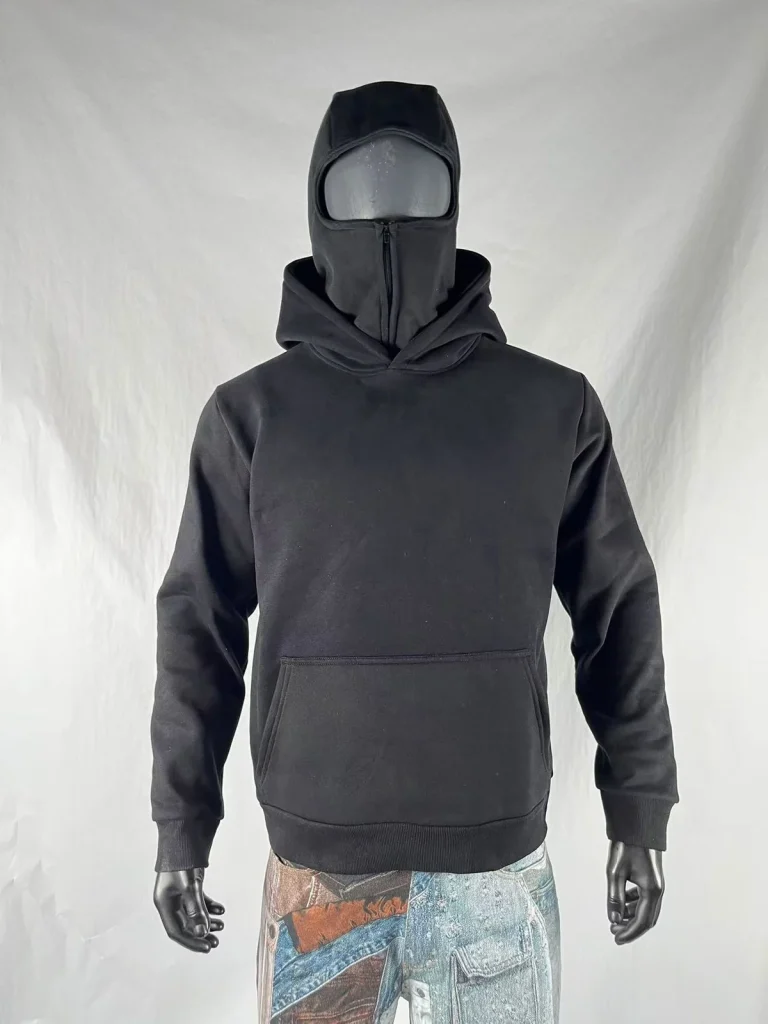
A balaclava hoodie combines a hooded sweatshirt with a built-in face-cover section. Depending on the pattern, the face cover may have its own zipper, or the centre-front garment zipper may continue upward into it. For a clothing brand, the important decisions are the hood construction, eye opening, neck fit and how the garment works with the face cover open or closed.
The 11 sample photographs below show four designs from Eking Clothing’s supplied material library: a dark pullover, a green graphic zip-up, a camouflage zip-up with a separate outer hood, and a yellow utility-style zip-up. They are construction references for a custom project, not a live ready-stock list. Fabric composition, GSM, measurements and availability need to be confirmed separately.
Discuss Your Custom Balaclava Hoodie
What Is a Balaclava Hoodie?
The defining feature is the integrated face-cover construction, rather than simply wearing a separate balaclava under a normal hoodie. The opening around the eyes and the fabric covering the lower face become part of the garment’s pattern and fit.
You may also encounter the name ninja hoodie. That label alone is not a technical specification. Send front, side and back references and explain whether you want a pullover body, a full front zip, a separate outer hood, or a removable face-cover component. Similar-looking photographs can conceal different constructions.
Pullover Balaclava Hoodie: Face Cover and Outer Hood
The dark sample has a pullover body and kangaroo pocket. Its short front zipper belongs to the face-cover section, rather than opening the sweatshirt body. The two front views show the outer hood lowered and raised.
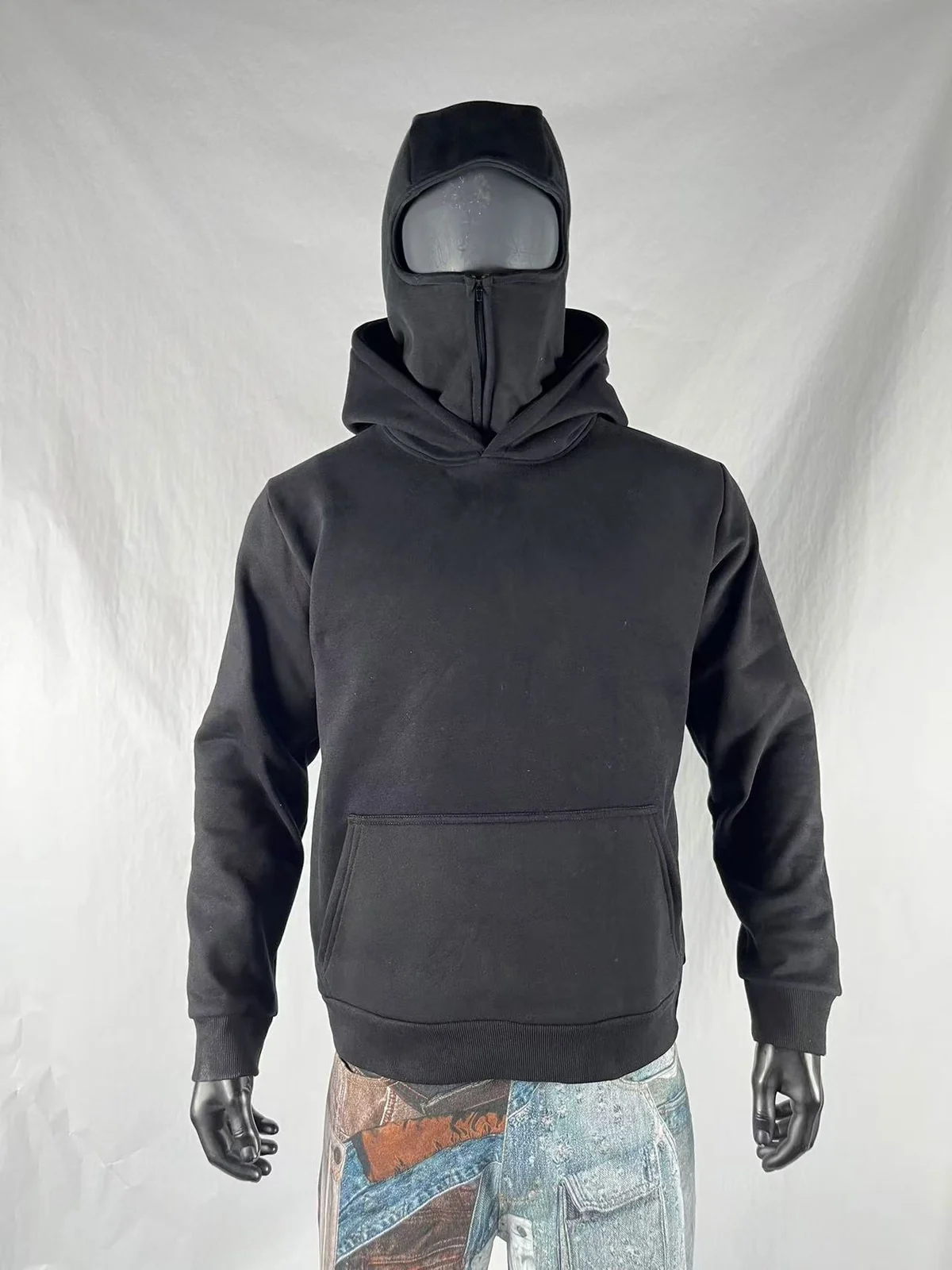
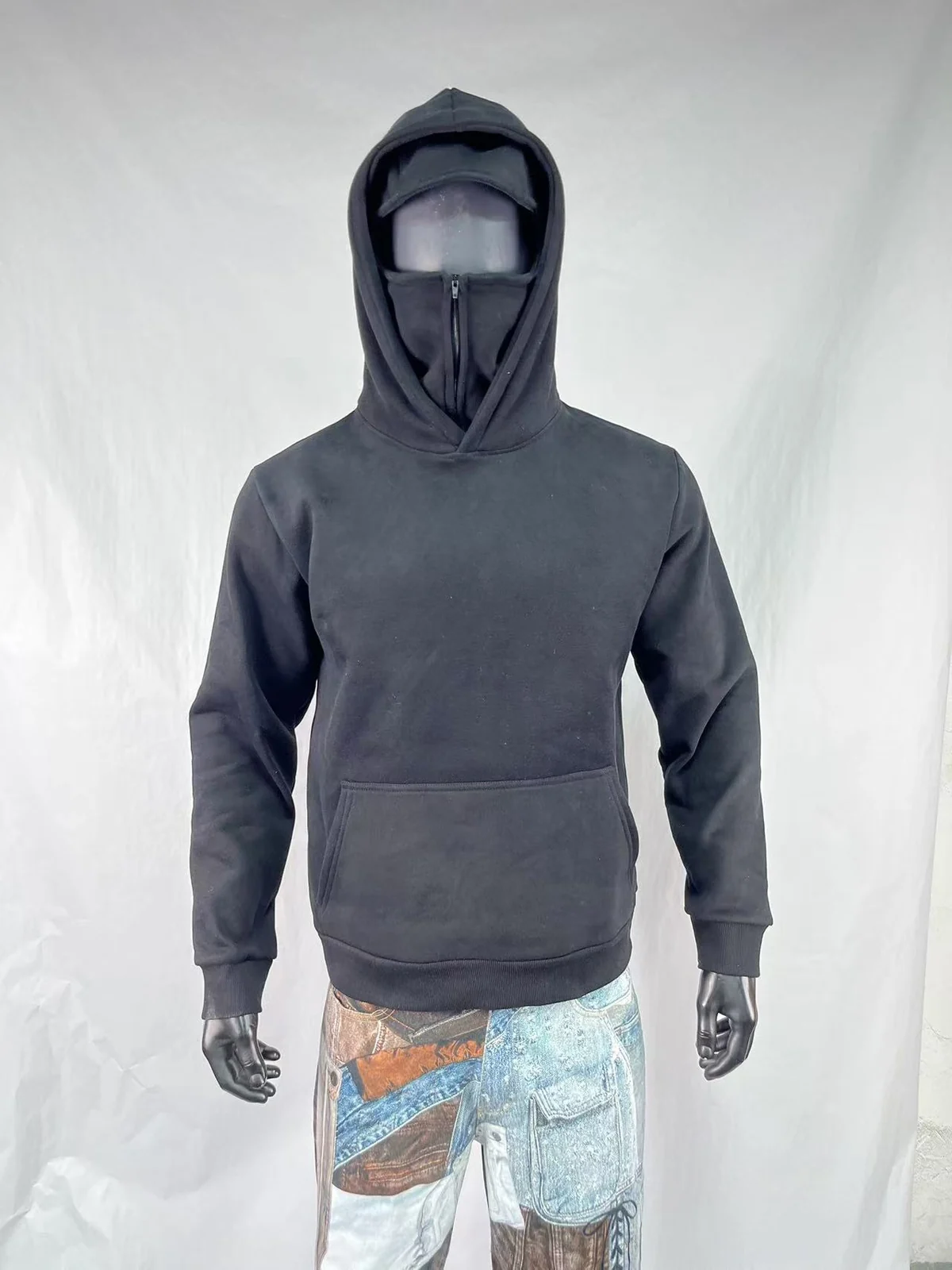
Review both positions during sampling. With the outer hood down, the face-cover panel still needs to sit as intended. With it raised, check how the extra layer affects the eye opening and the fabric around the neck. A mannequin can show the outline, but it cannot replace a wearer fit check.
Check the Hood Shape from the Side and Back
A front mockup does not explain the complete hood pattern. The side view shows how the cover projects around the face; the rear view shows the outer hood’s shape and its relationship to the shoulders.
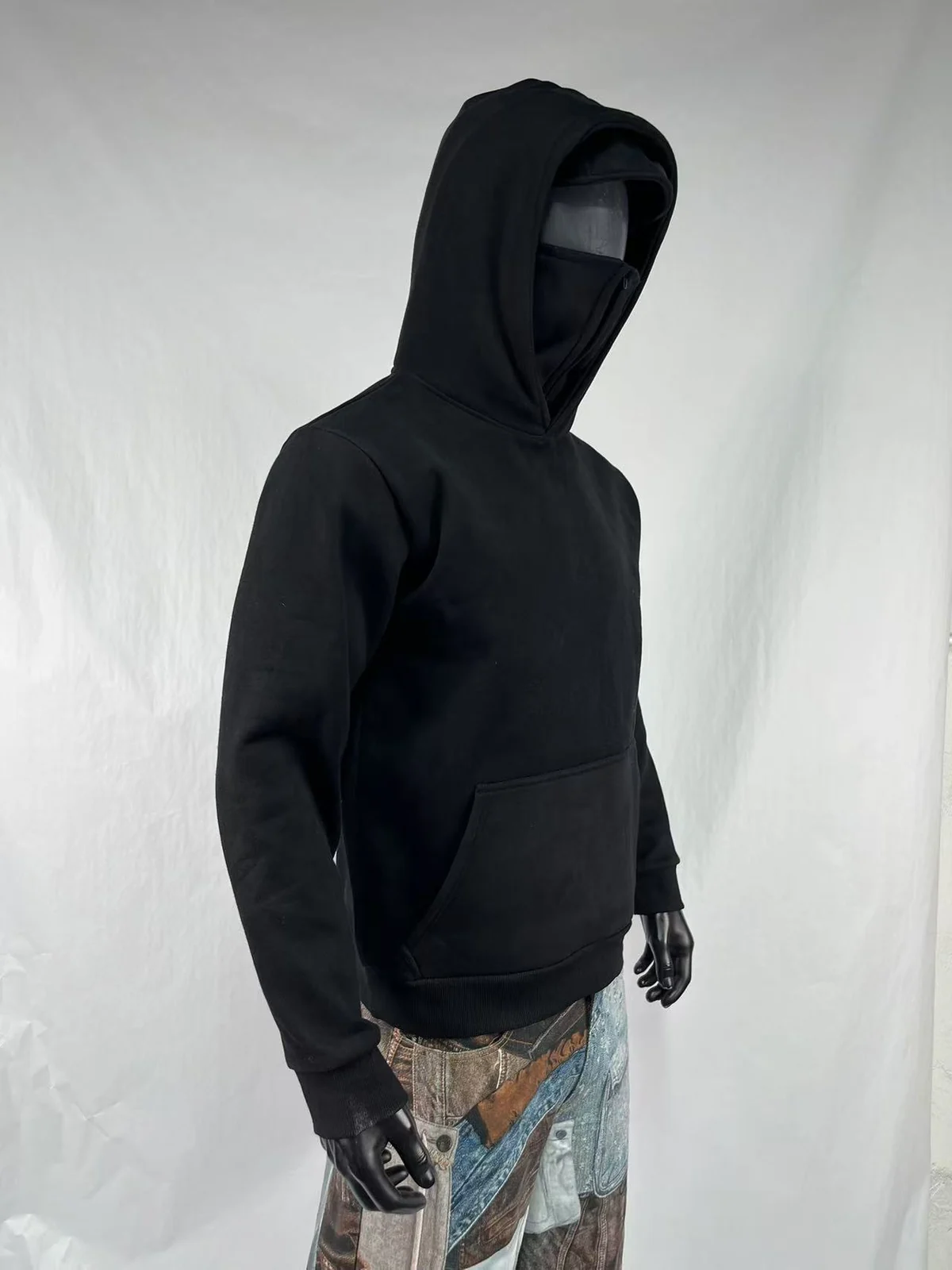
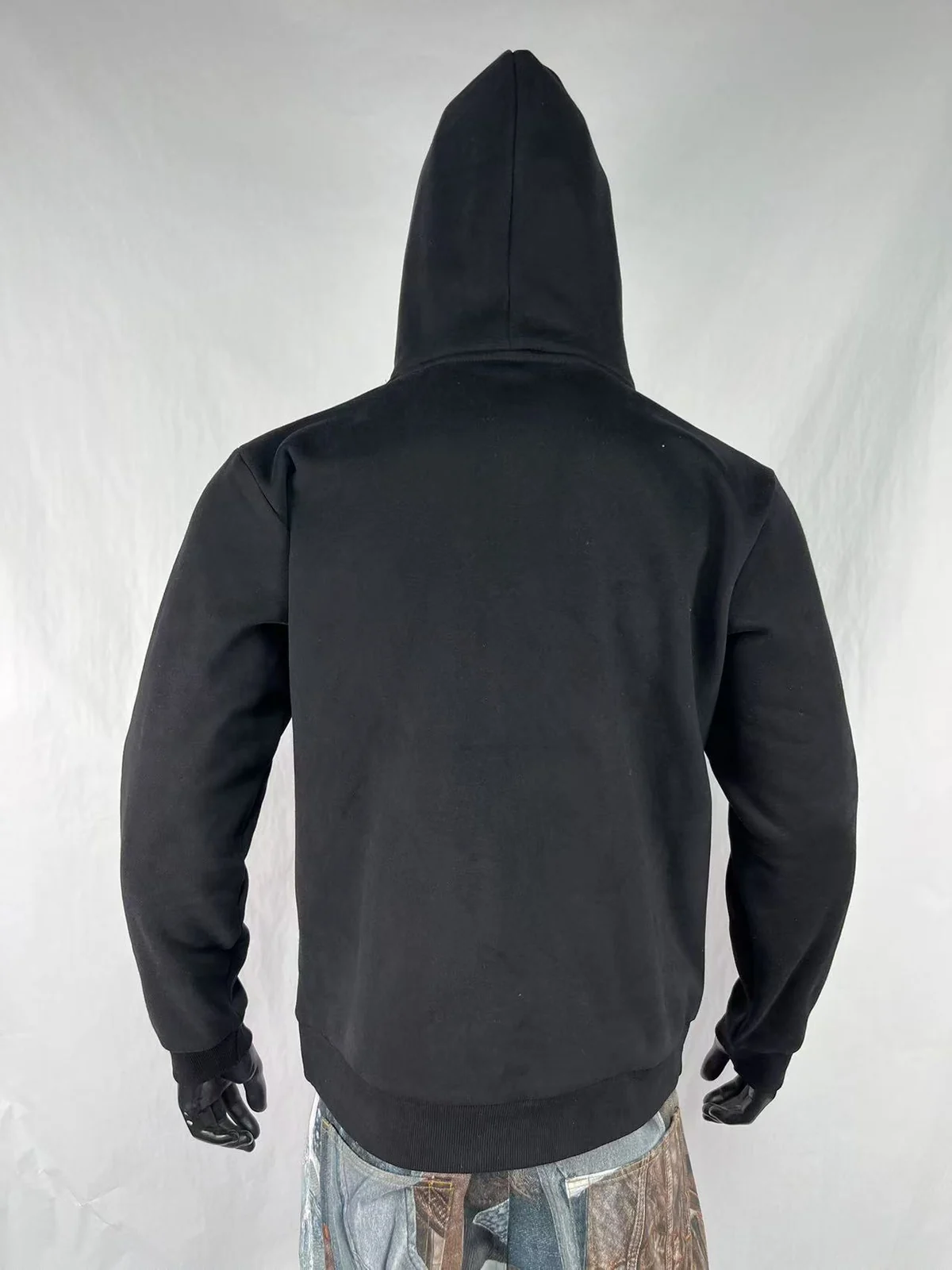
On a wearer, check head turning, looking up and down, putting the garment on and taking it off, and opening the face cover. Look for pulling at the neckline, excess fabric at the chin and an eye opening that shifts out of position. Define the intended coverage instead of approving the sample solely because the front photograph looks right.
Balaclava Zip-Up Hoodie: A Different Zipper Layout
The green graphic sample uses a centre-front zipper running from the body hem upward into the face-cover section. That is a different pattern and opening system from the dark pullover. Its front and rear photographs also show artwork distributed across several garment panels.
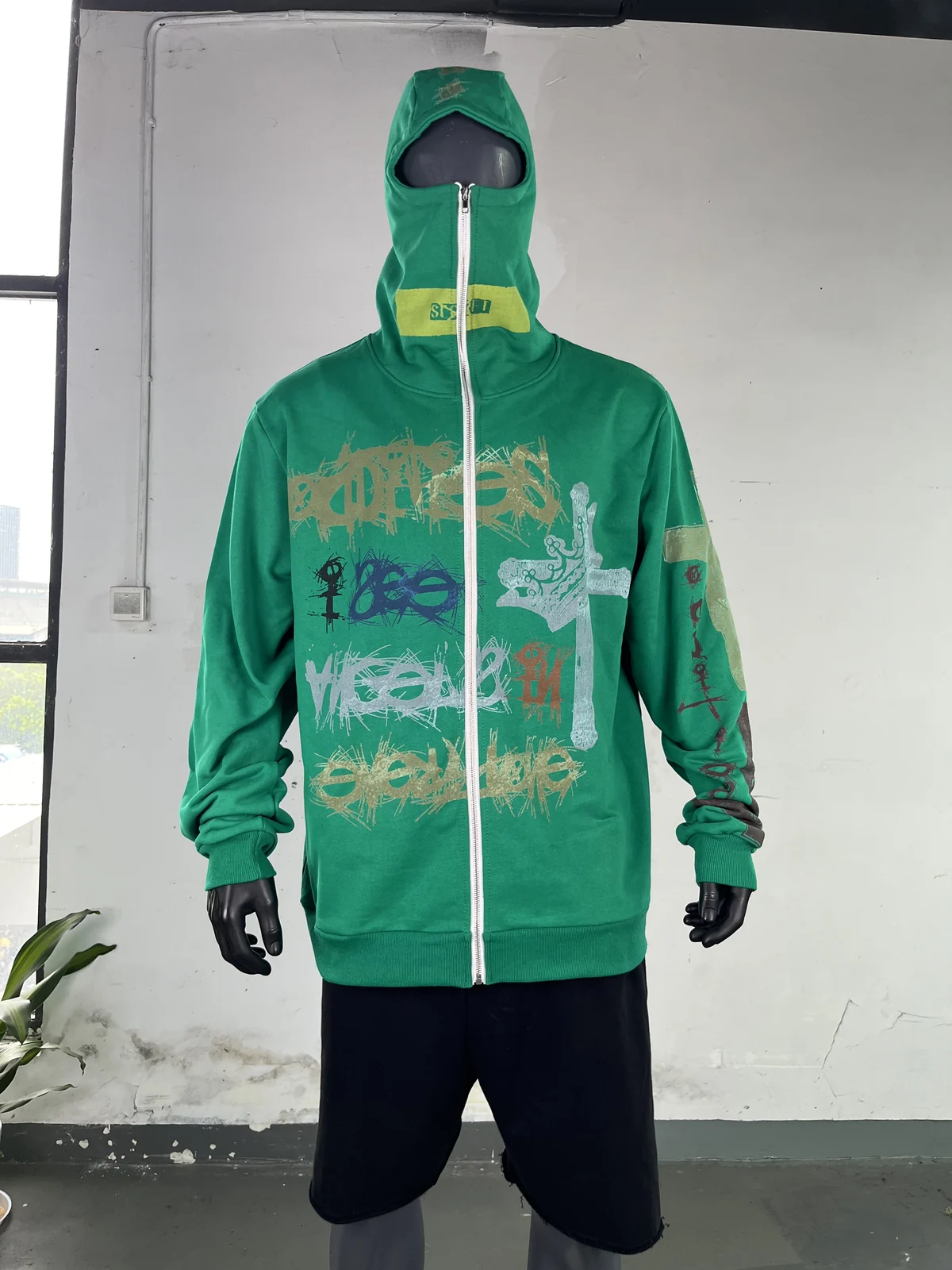
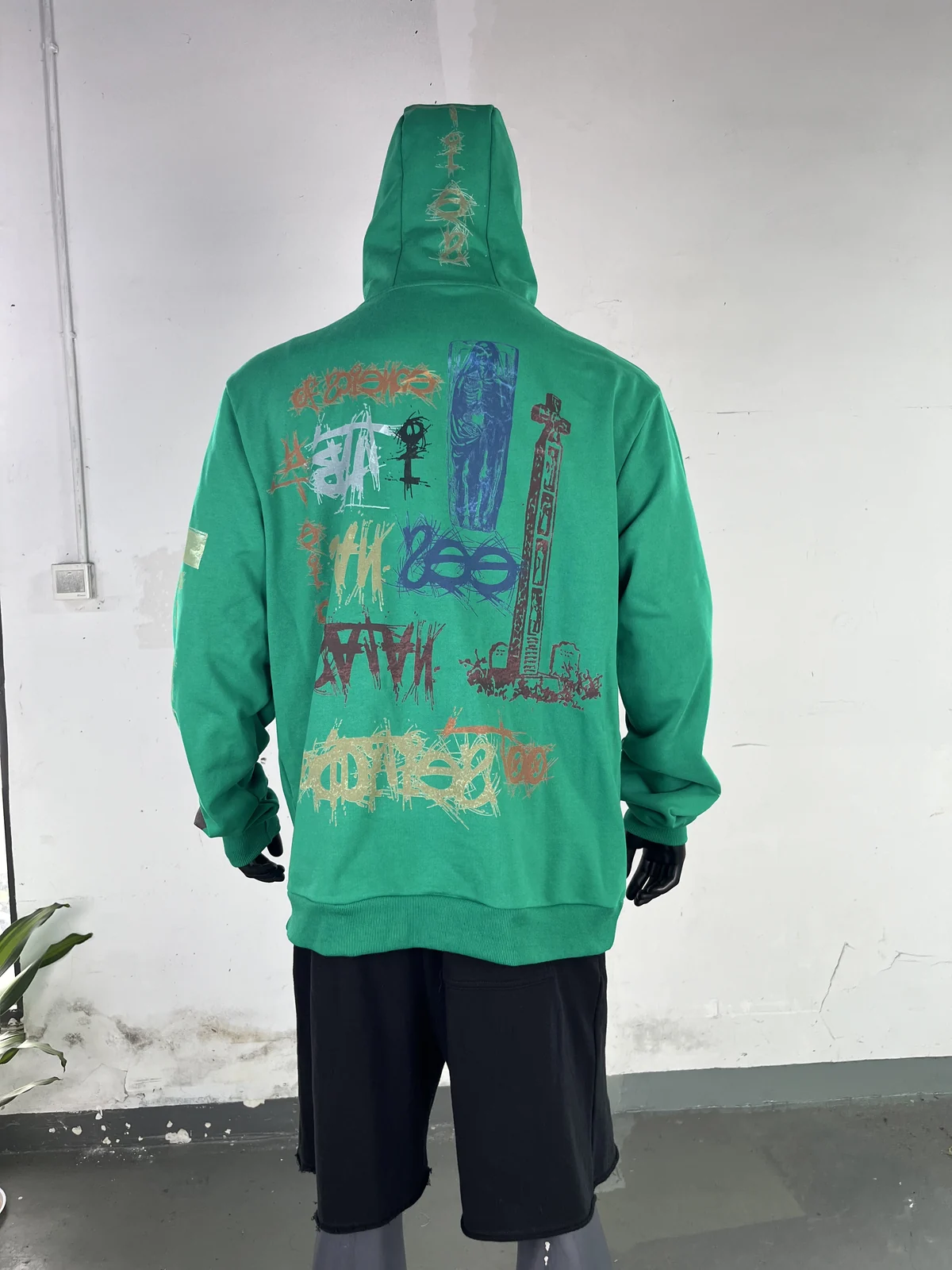
Specify zipper length, tape color, puller direction and the finish at the top end. Check alignment through the body and face-cover area, smooth operation, and whether the zipper or seam allowance contacts the wearer. Do not assume that a zip-up reference requires a particular zip type or that all balaclava hoodies use the same closure.
Camouflage Balaclava Hoodie: Compare Both Hood Positions
The camouflage zip-up sample combines a face-cover section with a separate outer hood. These three photographs show the outer hood raised, lowered and viewed at an angle. The lowered position makes the shape of the inner face-cover panel easier to see; the angled view shows how the two layers meet at the neck.
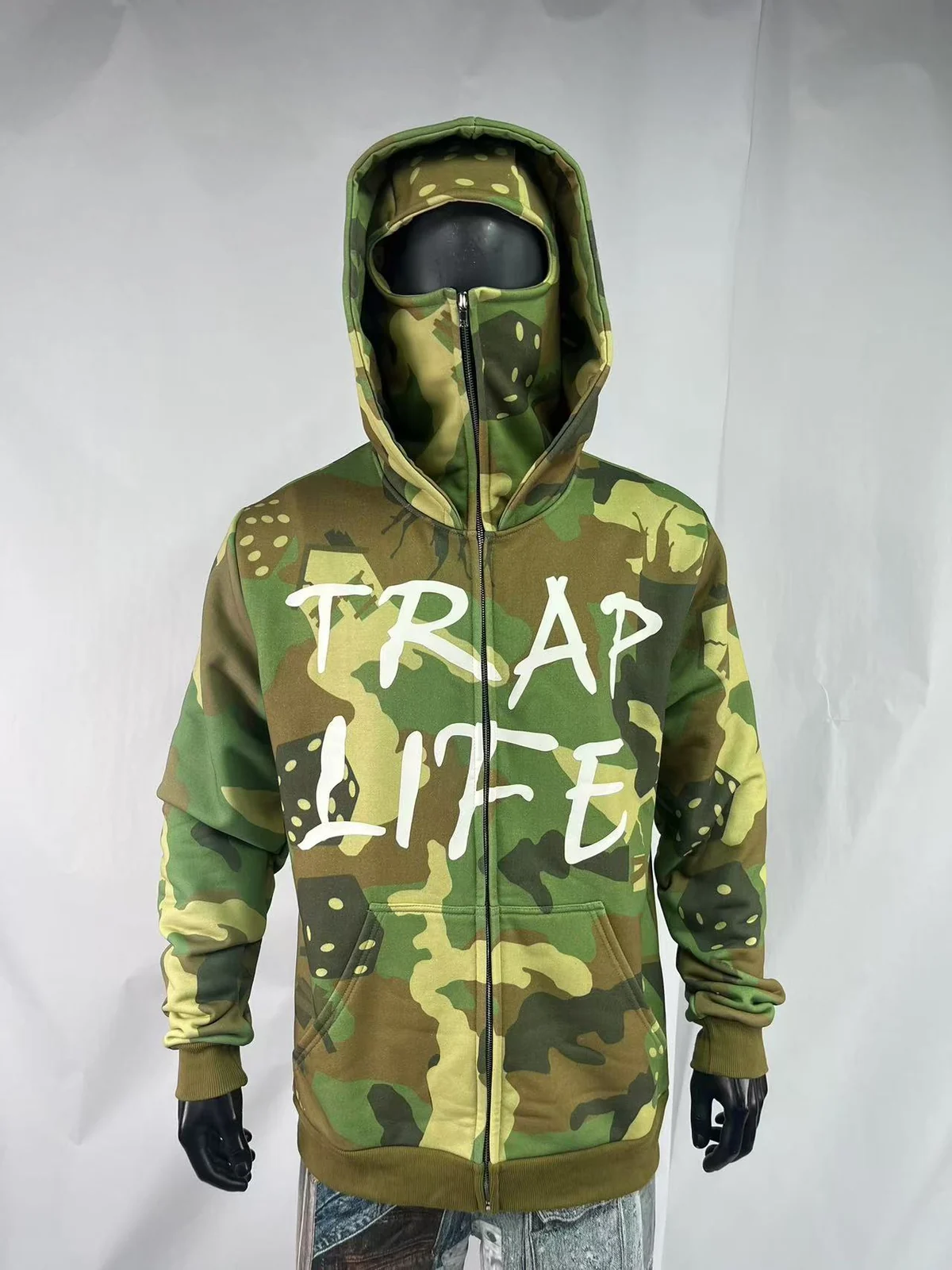
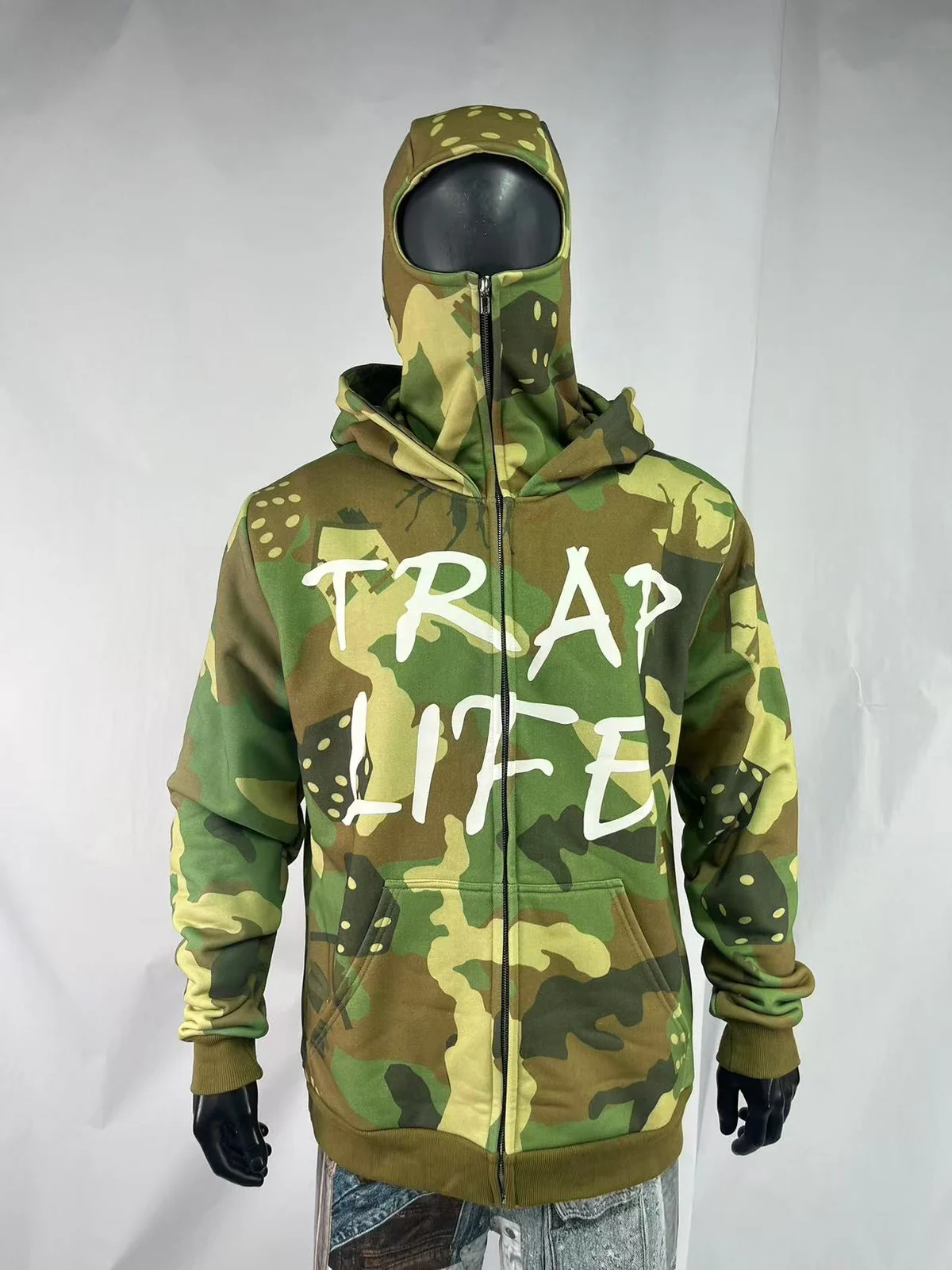
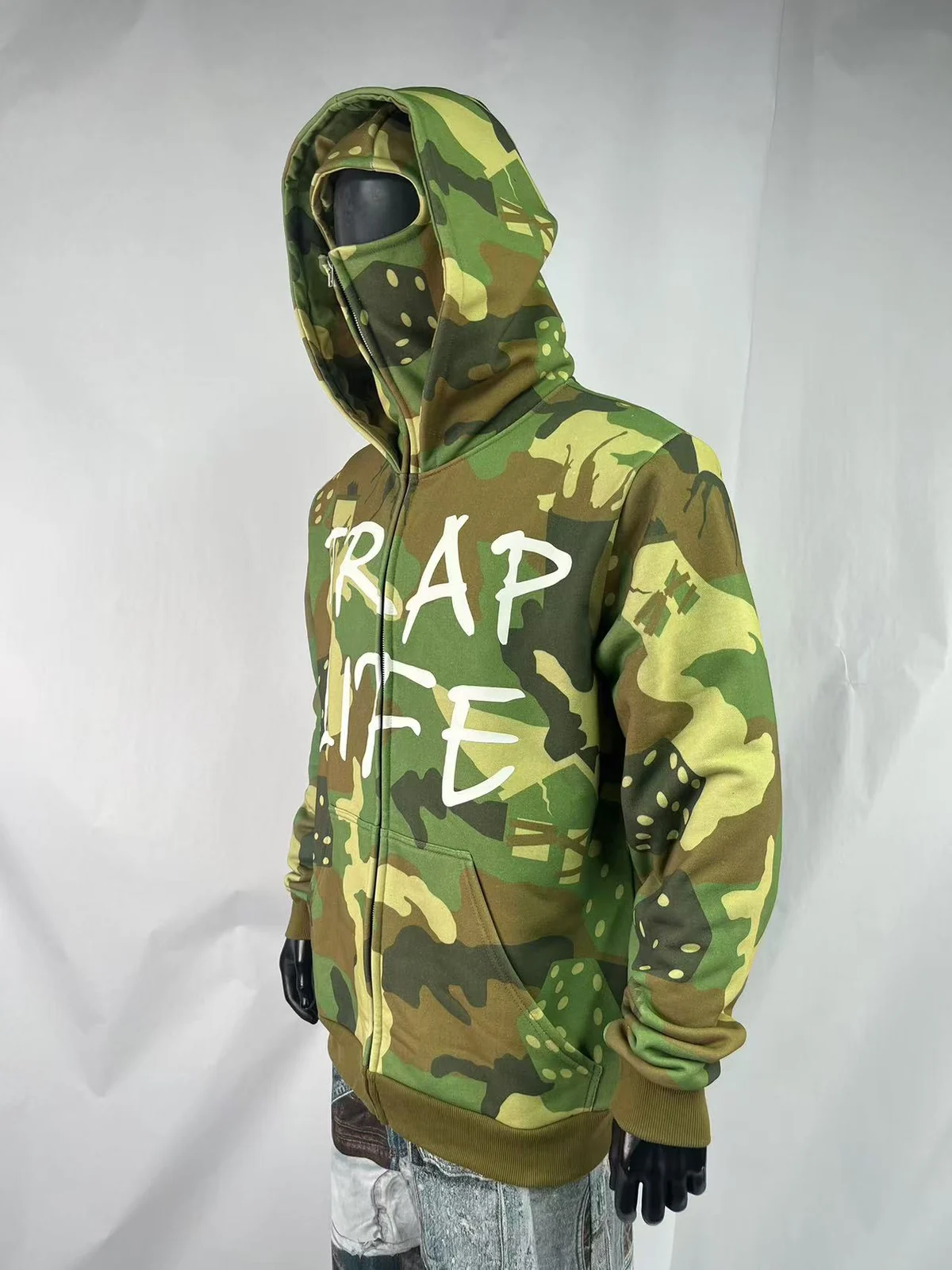
For a similar development brief, specify the intended eye opening in both hood positions and review fabric bulk around the neck. With a camouflage pattern and large lettering, also agree the placement of the pattern and graphics across the centre-front zipper and garment panels. The reference photographs show the appearance; they do not establish the print method or fabric composition.
Utility Balaclava Hoodie: Face-Cover and Pocket Details
The yellow sample uses a long face-cover panel above the body neckline and a centre-front zipper. Its body and sleeves include zippered patch pockets. The closer front photograph shows those construction details, while the full view lets you compare the face-cover height with the sweatshirt’s overall proportions.
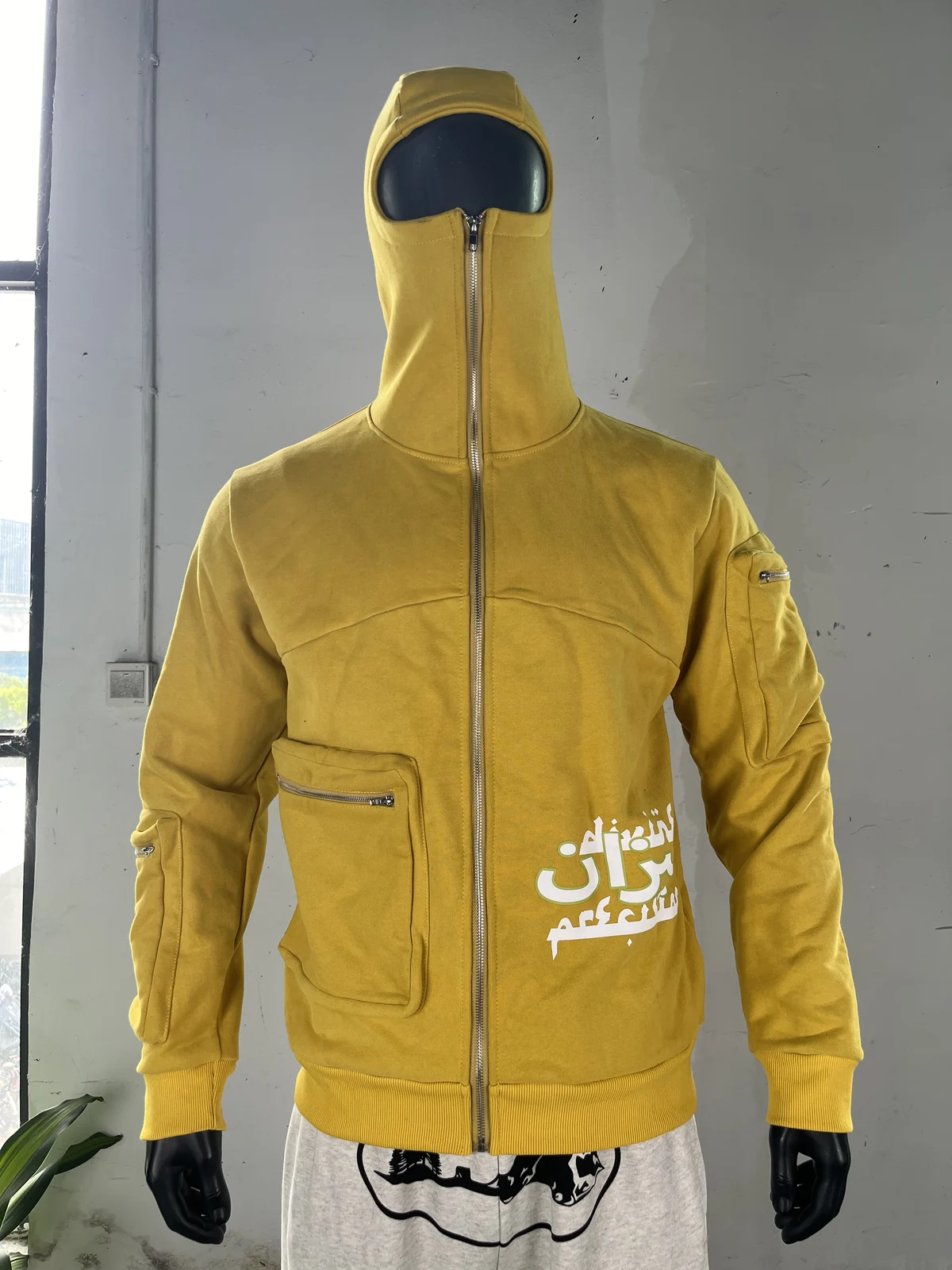
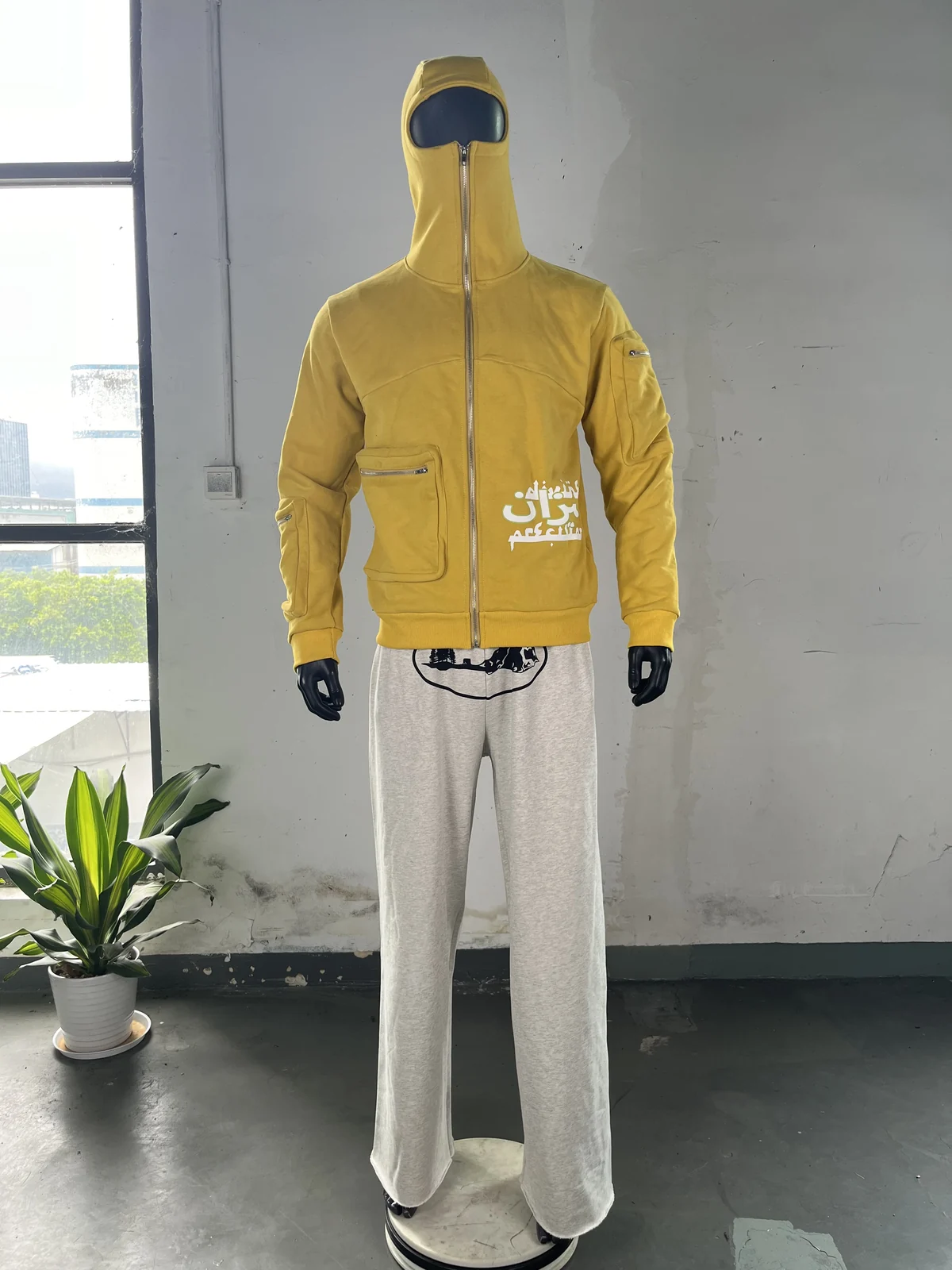
Include pocket dimensions, positions and zipper specifications separately in the tech pack. Review access to the pockets, the weight of the hardware and how the placement behaves with the arms bent. As with the other styles, a mannequin photo is a useful visual reference, but the face cover and neckline still need approval on a wearer.
Choose Fabric for the Body and Face Cover
Start with the intended silhouette and wearing conditions, then review composition, fabric weight, stretch, recovery and surface finish with your development team. A heavier sweatshirt fabric does not automatically create a better face-cover fit.
The body, outer hood and face-cover panel may need different construction decisions. Assess how much bulk builds up at the neckline, how the opening returns to shape after use, and how the inner seams feel. Review fabric options against your actual pattern. The photos in this guide do not establish a cotton percentage, GSM or tested warmth rating.
Plan Artwork Around Zippers and Seams
For a graphic balaclava hoodie, provide placement measurements for the body, hood and sleeves separately. Artwork crossing a centre-front zip needs an agreed alignment and tolerance. Small hood artwork must also be reviewed with the hood raised, lowered and viewed from the rear.
Choose printing or embroidery after checking the fabric and construction, not simply from the appearance of a reference photo. Thick decoration near an opening can change the hand feel and bulk. Review the available apparel decoration methods and approve the combined result on a sample using your own authorized artwork.
Balaclava Hoodie Sample-Approval Checklist
- Eye opening: confirm its dimensions and position on a wearer in the intended open and closed configurations.
- Head and neck fit: check movement, putting the garment on, removal and fabric tension around the chin and neckline.
- Zipper operation: check alignment, top-end finish, smooth opening and closing, and contact with the face.
- Outer hood: review depth and shape from the front, side and rear, both raised and lowered.
- Inside finish: inspect seam allowances, fabric bulk and any hardware contact points.
- Artwork: confirm placement, seam clearance and alignment across zips against the approved files.
- Care and sizing: evaluate the finished sample under the proposed care procedure and check face-cover dimensions across the size range.
Record agreed measurements and acceptable variation before approving production. Do not grade the face opening by automatically applying the same increments as the body width. Keep the approved sample and tech pack together; our clothing sample review checklist covers the wider garment approval process.
What to Send for a Custom Balaclava Hoodie Quote
Send a tech pack or a clear reference brief containing the construction you want, front/side/back views, intended face coverage, body and hood measurements, fabric preferences, zipper details, artwork placements, quantity and size breakdown, delivery country and target schedule.
Sample cost, bulk pricing, order quantity requirements and lead time need a project-specific review. The existing custom hoodie manufacturing service is the next step for discussing development; these sample photographs are not a promise of fixed specifications or immediate stock.
Send Your Balaclava Hoodie Brief
Balaclava Hoodie FAQs
Is a balaclava hoodie always a full-zip hoodie?
No. The dark sample in this guide has a pullover body and a separate face-cover zipper. The green sample has a body zipper continuing into the face-cover section. Specify which construction you need.
Can the face cover be removed?
These photographs do not show a detachable face cover. If removability is important, include it in the development brief and confirm the attachment method, appearance and fit on a sample.
Can I use my own graphics and colors?
Send your authorized artwork, color references and placement drawings for review. Confirm the fabric, decoration method and color result during sampling rather than treating the reference photos as a fixed catalog specification.
Do the photographs prove the fabric weight or fit?
No. They show visible construction and styling on mannequins. Fabric specifications require confirmation, and the hood and face cover need a wearer fit check before production approval.