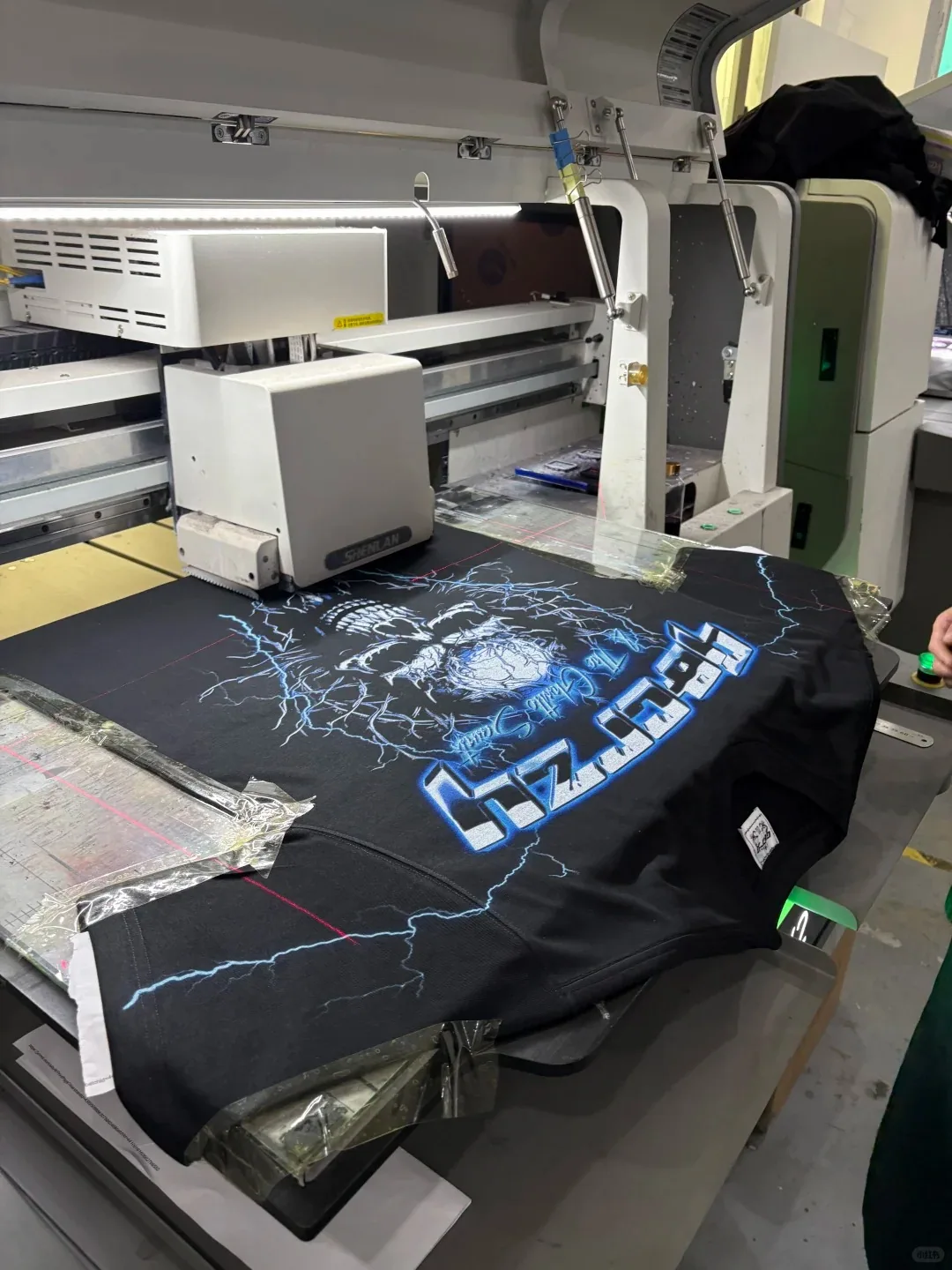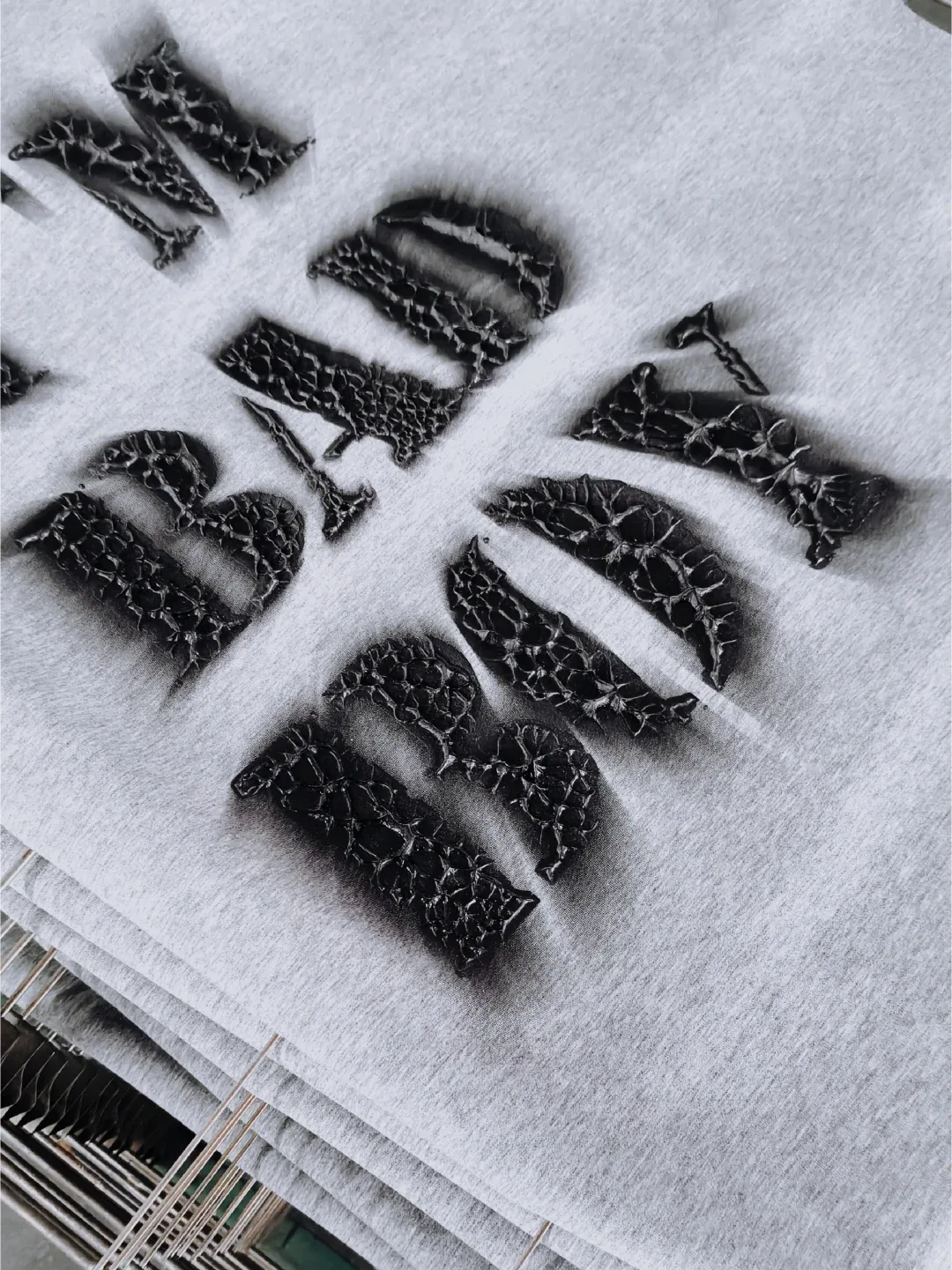

Pearl embellishment for clothing adds raised, rounded bead details to a garment. The beads may be sewn on or attached with a setting machine, depending on the design and fastening system. For a clothing brand, the key questions are how the decoration is attached, how it feels against the body, and whether the complete garment can withstand its intended care routine.
The short process video below shows operator-guided pearl setting on a purple decorated garment. It is a useful reference for developing beaded graphics, but it is not a wash-test report or a specification for every fabric.
Watch the Pearl-Setting Process
Discuss Your Pearl-Embellished Design
The operator holds and repositions the fabric while the machine applies the decorative elements. The changing bead layout is visible across the clip. This is machine-assisted bead application, not evidence that every bead has been individually sewn by hand.
How the Beads Are Fixed to the Fabric
In the process shown here, a post passes through the fabric and a locking backing cap secures it on the reverse. This mechanical fastening holds the decoration from both sides of the fabric; it is different from attaching a bead with sewing thread or bonding a flat-backed stone with adhesive.

For sample approval, inspect the cap on the inside of the garment, check that the decoration sits securely, and look for fabric distortion around the fixing point. Consider whether the reverse-side hardware contacts the body during wear and whether the design needs a lining or another construction adjustment.
The front-view video does not show the reverse-side finish or establish bead composition and wash durability. Confirm the exact post and cap construction, trim material and care performance on a physical sample rather than inferring them from the front view.
Machine-Set Pearls, Sewn Beads and Rhinestones Are Different
These terms describe different design choices. A pearl-like appearance does not establish that the trim is a natural pearl, and the word “beaded” does not identify the fastening method.
- Machine-set pearl-look beads: a setting machine fixes compatible trim to the fabric. Some systems use a pin or stud-rivet fastening. For example, Kilicoglu’s pearl-setting machine description specifies a stud-rivet system. This illustrates one attachment method; it does not identify the machine or backing used in our clip.
- Sewn beads: thread passes through or around suitable trim to hold it in place. If a project requires hand-sewn beadwork, state that requirement explicitly and inspect the stitching.
- Rhinestones: faceted decorative stones create a different visual effect from rounded pearl-look beads. The appropriate attachment method depends on the stone type and garment construction. Explore our rhinestone decoration page for that design direction.
Choose the visual effect first, then agree on a compatible fastening system. Do not approve one method on a sample and leave the bulk-production method unspecified.
Designing Pearl Embellishment Around Your Garment
Start with a placement drawing, not only a mood-board image. Show the artwork size, the decorated area, bead colors and sizes, and whether the arrangement should follow a fixed pattern or a controlled scattered layout.
In the video, light-colored beads contrast with the purple base and sit alongside other decorative details. A similar idea could frame a graphic or accent a selected part of a design. A finished look still needs to be developed for your own artwork and garment.
Review the base fabric before committing to the layout. Check how the decorated area drapes, whether the fabric puckers, and whether movement changes the spacing. Dense decoration and placement near necklines, seams or other contact areas deserve particular attention on the sample.
Also agree on the order of operations. If the garment includes printing, embroidery or a washed finish, discuss when the beads will be applied and whether later processing could affect the decoration. Review these combinations with the broader apparel customization options.
What to Check Before Approving a Beaded Sample
A clear front-view photo is only part of sample approval. Inspect the garment in person where possible, including its inside surface and the areas that bend during wear.
- Appearance: check bead size, color, finish, spacing and alignment against the approved placement drawing.
- Attachment: inspect for loose, missing or damaged trim. Agree on a suitable attachment-strength test and acceptance criteria with the supplier or testing laboratory.
- Reverse-side comfort: look at the fastening or stitching inside the garment and check for rough contact points. Decide whether the design needs a lining or another construction change.
- Fabric condition: check for visible damage, distortion and puckering around the decorated area.
- Fit and movement: wear or handle the sample to review drape, added weight and contact between the trim and surrounding surfaces.
- Care performance: assess the finished garment under the proposed washing, drying or professional-care procedure before finalizing the care label.
Keep the approved sample and placement file as references for production. Define how missing beads, misalignment and visible fabric damage will be handled. A process video cannot replace these acceptance criteria.
Can Pearl-Embellished Clothing Be Washed?
There is no single washing instruction for all beaded clothing. The base fabric, print, bead finish, fastening and garment construction all matter. Do not assume that a machine-set decoration is automatically machine washable, or that every embellished garment must be dry cleaned.
Confirm the proposed care procedure through appropriate evaluation of the finished sample. ASTM’s guide to textile-care test methods provides a reference for evaluating care-related properties. It is not proof that the garment in this video has passed a particular test.
For a buyer brief, specify the care experience you need and ask the development team to assess it. Once the sample and instructions are approved, use the agreed care label rather than copying a generic instruction from another garment.
Send a Clear Brief for a Pearl-Embellished Design
To discuss a similar effect with Eking Clothing, send your garment reference or tech pack together with:
- The garment type, intended fit and base fabric, if already selected.
- Your original artwork and a placement drawing with measurements.
- Preferred bead colors, sizes and finish, plus any attachment-method requirement.
- Other decoration or finishing processes used on the same garment.
- Order quantity, size breakdown, target market and intended care instructions.
Pricing and feasibility need to be reviewed against the actual design. Bead quantity, layout complexity, material compatibility and sampling requirements should be discussed before a production quote is confirmed.
Discuss Your Pearl-Embellished Apparel Design. Share the video as a process reference and explain what you want to change for your own collection.
Pearl Embellishment: Buyer FAQs
Is the process in the video hand beading?
The footage shows an operator positioning the garment under a setting machine. Describe it as operator-guided or machine-assisted pearl setting, rather than hand-sewn bead embroidery.
Can this decoration be added to a T-shirt or hoodie?
Submit the intended garment and layout for a sample assessment. Compatibility depends on the fabric, trim, fastening, placement and required care performance; a successful result on one garment does not establish suitability for every style.
Can pearl-like beads be combined with printed artwork?
The video shows rounded beads alongside existing artwork and smaller decorative elements. For a new project, approve the combined appearance, placement and production sequence on your own sample.
Does a fast setting process guarantee bulk-production quality?
No. Production approval still needs an agreed sample, placement specification and inspection criteria. The clip shows a process in action, not a delivery guarantee or a durability certification.
Related Decoration Examples: Rhinestones and Studs
These photographs show a separate decoration effect: printed graphics combined with rhinestones and framed crystal-like studs. They are not stills from the pearl-setting video. For a similar design, assess the trim’s attachment method, the reverse-side finish and care performance on your own sample. Explore our rhinestone apparel decoration options for this design direction.