Garment dyeing adds color after a garment has been sewn. For a streetwear collection, the practical question is not just which color to choose. It is where that color should appear, how much variation is acceptable, and whether the fabric, rib, seams and artwork still look right after finishing.
This guide compares dip dye, tie dye and localized spray effects using nine short process videos supplied by Eking Clothing. It also separates hand abrasion from dyeing, so your development brief describes the finish you actually want.
The footage is published with permission as a process reference. It does not document every processing stage, identify chemical formulations, or establish test results. All nine videos below are silent.
What Is Garment Dyeing?
Garment dyeing means coloring an assembled garment rather than dyeing its fabric before cutting and sewing. AMANN’s garment dyeing reference describes this sequence and distinguishes dip-dye and tie-dye effects. The process must be considered alongside the garment’s construction, not only its main fabric.
Garment dyeing and garment washing are related, but they are not interchangeable terms. Dyeing concerns color application; washing and other finishing steps can affect appearance, handle and dimensions. CottonWorks treats preparation, dyeing, afterwashing and finishing as distinct parts of garment wet processing.
If your reference is mainly an all-over washed appearance rather than a color-placement effect, start with our garment washing guide for streetwear. This article focuses on how to brief gradients, irregular patterns and localized effects.
Dip Dye: Define the Gradient and Transition Height
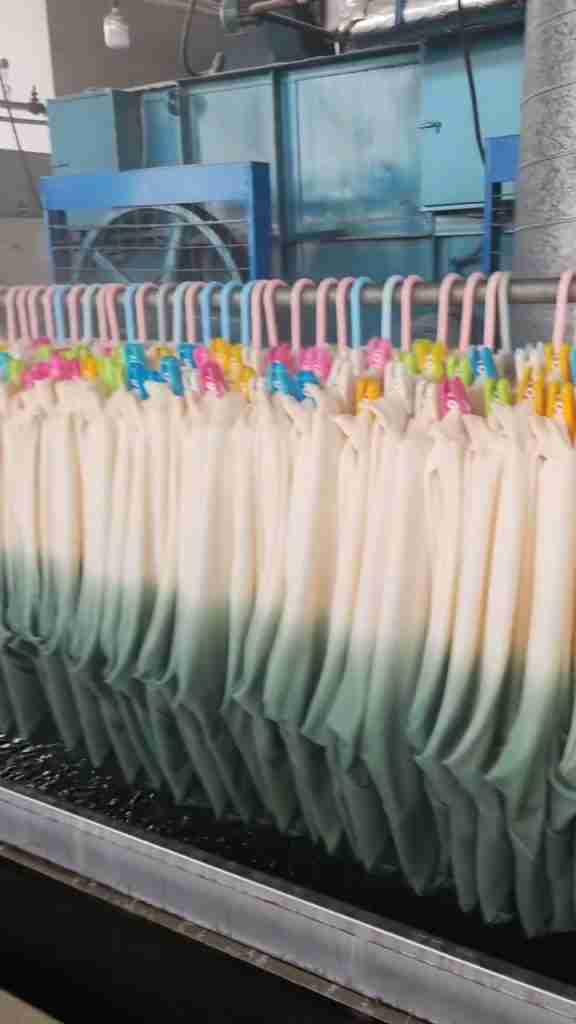
Dip dye places part of an assembled garment into a dye bath, often while the garment is held on a hanger. It can create a transition between a base area and a colored area. AMANN’s reference describes dipping and raising garments to produce gradients; the exact result still depends on the approved process and material.
The two clips below show separate hanger setups with red and green lower sections. They are useful for discussing the position of a color transition. They do not show the entire recipe or prove that every garment finishes with an identical shade.
What to Put in a Dip-Dye Brief
- Transition position: mark where the colored section starts on the body and sleeves, using a measurement and an annotated image.
- Gradient character: show whether you want a gradual fade, a narrow transition or a more defined division.
- Front and back: specify whether both sides should follow the same placement, including pockets and side seams.
- Size handling: state whether the placement follows a fixed measurement or a proportion of each garment size.
A single reference photo is rarely enough to settle all four points. A marked front-and-back drawing makes sample feedback much clearer.
Tie Dye: Approve a Pattern Direction, Not a Pixel-Perfect Copy
Tie dye uses folding, tying or other restraint before coloring to create irregular patterns. The relationship between the arrangement of the garment and the finished pattern is part of sample development. A brand should define the intended pattern family and acceptable variation rather than expect a photograph to repeat exactly on every piece.
This clip shows bundled garments during processing, not the final unfolded result. For approval, request a complete finished sample, front-and-back photographs and close-ups of important areas. Mark which colors should dominate, where a graphic needs to remain readable, and which zones may have a more open or more concentrated pattern.
If pattern variation is part of the design, approve a representative range. One unusually light or dark sample should not silently become the only production standard.
Spray Effects: Make Color Placement Measurable
Localized spray application offers a different visual reference from dipping or tying. In these clips, color or tonal treatment is applied to selected garment areas. The spray equipment alone does not establish whether the treatment uses a dye, pigment or another finishing system.
For development, send a placement map instead of only asking for a “vintage spray look.” Identify the main treatment zones, the edges that should stay clean, the desired contrast and whether the effect continues onto the sleeves or back. If there is a print, show whether it should remain distinct or visually blend with the surrounding finish.
Evaluate the completed, dry sample. A dark patch during wet application is not evidence of the final shade. These videos do not identify the chemicals used, so they should not be treated as instructions for reproducing a chemical process.
Hand Abrasion Is a Separate Finishing Step
The next two clips show manual abrasion on a printed T-shirt and a green hoodie. They belong in a finishing discussion, but they are not garment dyeing. Separating the terms avoids a common briefing problem: a buyer requests “washed” clothing while the reference actually combines added color with localized surface wear.
Mark the intended abrasion zones and the areas that should remain intact. During sample review, examine the surface, print readability, seam condition and unwanted holes. A process video cannot substitute for checking the finished garment.
Check the Whole Garment Before Bulk Approval
A finish must work with the assembled product. CottonWorks lists fabric, thread, buttons and zippers among the construction considerations for garment dyeing. AMANN also emphasizes matching thread selection to the material and dyeing process, with individual testing rather than one universal thread solution.
- Fabric and rib: review the actual body fabric and rib together; agree on any intended shade difference.
- Seams and components: check visible stitching, pocket edges, labels, zippers and other trims after finishing.
- Artwork: approve print or embroidery alongside the finish, including the planned order of operations.
- Measurements: compare finished dimensions with the agreed size specification, not just the untreated garment.
- Color and care: agree on the relevant wash and rubbing checks and care requirements; request results where needed.
- Production reference: retain an approved finished sample and written comments covering acceptable variation.
These are approval checkpoints, not a statement that the garments in the videos have passed specific tests. Commercial terms and testing requirements should be confirmed for the individual project.
What to Send for a Garment Dyeing Quote
Send the garment type, fabric composition and target weight if known, your size specification, front-and-back artwork, effect references, quantities by color and size, and your intended delivery schedule. Add an annotated placement map for dip-dye or spray work, or a pattern-range reference for tie dye.
Eking Clothing can review your brief and discuss the sample-development route. Feasibility, minimum order quantity, pricing and timing need project-specific confirmation. See our garment washing and finishing service for the related service overview.
Discuss Your Garment Finishing Project
Garment Dyeing FAQ
Is garment dyeing the same as acid washing?
No. Garment dyeing describes applying color after assembly. A wash-effect name describes a different aspect of processing and may be used inconsistently by suppliers. Use a physical sample or a clear visual reference, and confirm the intended process rather than relying on the name alone.
Can a printed T-shirt or hoodie be dyed?
It requires development with the actual garment and decoration. Some clips here show treatment on printed garments, but that does not prove compatibility with every ink, embroidery thread or fabric. Approve the combined finish and artwork on a sample.
Will every tie-dye garment look identical?
Do not assume an exact pattern repeat. Agree on the pattern direction, dominant colors and acceptable variation using finished samples before bulk approval.
Can one video establish a production specification?
No. A video can communicate an effect or processing stage. It does not provide the fabric details, finished measurements, test results or acceptable tolerances needed for a production specification.