
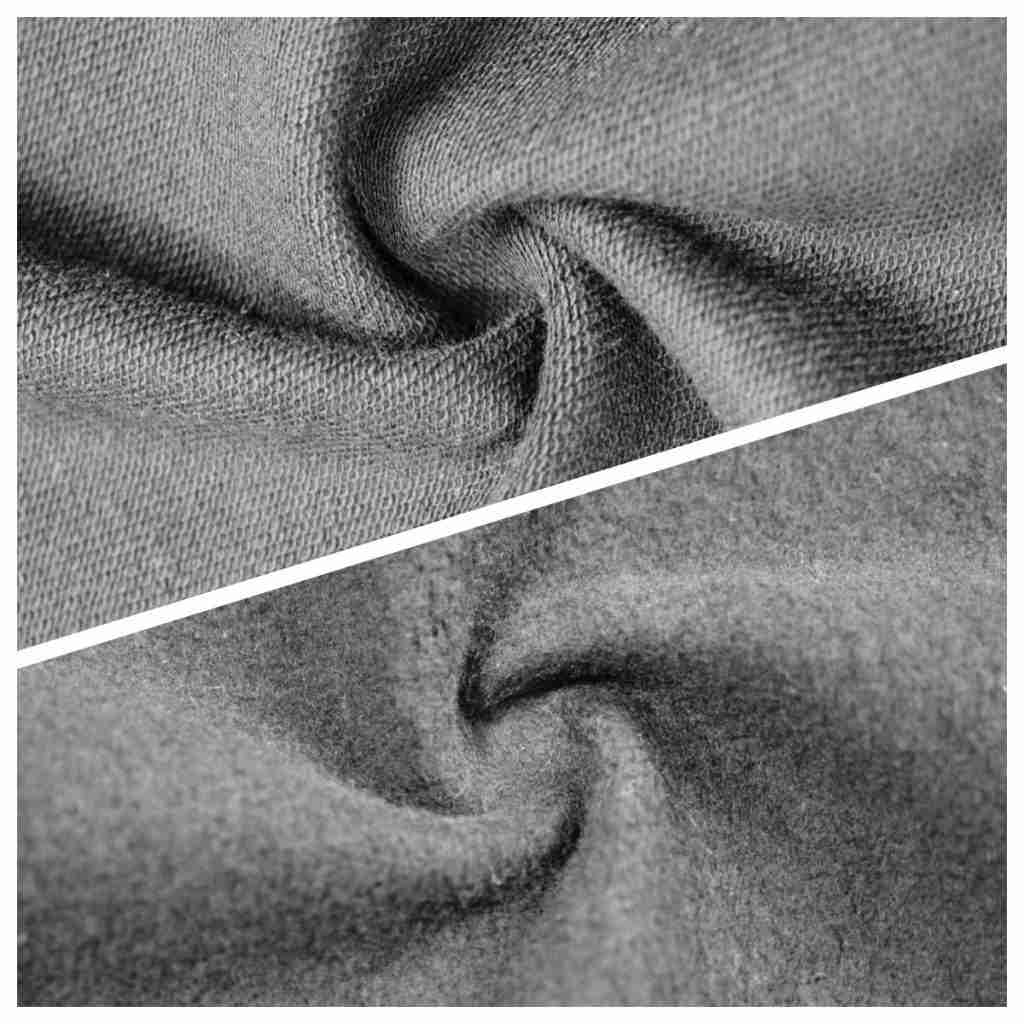
French Terry vs Fleece for Hoodies. When developing custom hoodies, one of the most important decisions is fabric selection. For many brands, the most common comparison is French Terry vs Fleece for Hoodies. Both fabrics are widely used in casualwear and streetwear, but they create very different results in terms of weight, warmth, texture and overall product feel.
Choosing the right hoodie fabric affects not only comfort, but also fit, print compatibility, seasonality and brand positioning. In this guide, we compare French terry vs fleece to help brands understand which option is better for different hoodie styles and product goals.
A hoodie may look similar from the outside, but the fabric changes the entire wearing experience. The right material can influence:
- warmth and seasonality
- fabric weight and drape
- softness and hand feel
- print performance
- washing results
- perceived product value
For brands developing hoodies, fabric choice should match the intended fit, target customer and overall collection direction.
What Is French Terry?
French terry is a knit fabric with a smooth face and looped back. It is commonly used in hoodies, sweatshirts and casual sets because it offers a balance between comfort, breathability and structure.
French terry is often chosen for:
- spring and autumn hoodies
- lighter streetwear hoodies
- everyday casualwear
- washed hoodies
- styles that need better breathability
Because the inside has loops rather than brushed fibers, French terry usually feels lighter and less insulating than fleece.

What Is Fleece?
Fleece hoodie fabric usually has a smooth outer face and a brushed inner side. The brushed backing gives the fabric a softer and warmer feel, which makes it a popular choice for colder weather products.
Fleece is often used for:
- warm hoodies
- winter collections
- heavyweight casualwear
- comfort-focused basics
- cozy interior hand feel
Compared with French terry, fleece generally feels thicker, softer on the inside and more suitable for colder conditions.

French Terry vs Fleece for Hoodies: The Main Difference
The biggest difference between French terry vs fleece for hoodies is the inside structure of the fabric.
French terry has:
- looped inner texture
- lighter and more breathable feel
- cleaner structure
- better suitability for transitional weather
Fleece has:
- brushed inner texture
- warmer and softer feel
- more insulation
- stronger comfort for cold-weather wear
If a brand wants a hoodie that feels lighter and more versatile, French terry is often the better choice. If the priority is warmth and softness, fleece is usually more suitable.

Which Fabric Is Better for Streetwear Hoodies?
The answer depends on the style direction. When comparing French Terry vs Fleece for Hoodies, the better choice depends on the product direction and target season.
For more fashion-focused or streetwear-driven hoodies, French terry often works well because it can provide:
- cleaner drape
- easier layering
- better spring and autumn wearability
- compatibility with washed finishes
- a slightly more structured look
For cozy basics, winter drops or comfort-led hoodies, fleece is often the stronger option because it gives:

- more warmth
- softer inside feel
- thicker body
- stronger comfort appeal
In practical development, many brands use both. French terry can be used for lighter or more premium-feel hoodies, while fleece works better for colder and softer everyday products.
French Terry Pros and Cons
Advantages of French Terry
- more breathable than fleece
- suitable for transitional weather
- good for layering
- works well for washed hoodie styles
- cleaner interior structure
- often preferred for fashion-focused hoodies
Limitations of French Terry
- less warm than fleece
- inner loop texture may feel less soft to some customers
- not always the best choice for winter-heavy products
French terry is a strong option for brands that want hoodies with better versatility, breathability and a cleaner streetwear feel.
Fleece Pros and Cons
Advantages of Fleece
- warmer than French terry
- softer inside hand feel
- more suitable for cold-weather hoodies
- strong comfort appeal
- good for heavier casualwear basics
Limitations of Fleece
- less breathable
- can feel too warm for spring and summer drops
- may create a bulkier look depending on fabric weight
- not always ideal for lighter streetwear layering pieces
Fleece is best for brands that want a hoodie to feel soft, warm and easy to wear in colder seasons.
French Terry vs Fleece: Which Prints Better?
Both fabrics can work well with printing, but the best option depends on the design and garment direction.
French terry is often a good choice for:
- washed graphics
- puff print
- screen print
- fashion-driven hoodie styles
- more structured logo placement
Fleece is also printable, but the thicker and softer structure may affect the overall feel of the finished hoodie, especially on heavier styles.
For both fabrics, brands should always confirm:
- fabric thickness
- print method
- expected shrinkage
- wash performance
- final hand feel after printing
Strong quality control is also important for checking fabric consistency, print performance and final hoodie presentation before shipment.
If the hoodie is meant to look more premium and fashion-oriented, French terry often gives a cleaner overall result. If the hoodie is more comfort-led, fleece is still a strong option.
For brands planning labels, trims and packaging details, our brand services can also support a more complete hoodie development process.

Which Fabric Is Better for Heavyweight Hoodies?
Heavyweight hoodies can be made in both French terry and fleece.
Heavyweight French terry is often chosen for:
- premium streetwear hoodies
- boxy or oversized silhouettes
- washed products
- hoodies with a more structured shape
Heavyweight fleece is often chosen for:
- winter basics
- comfort-focused hoodies
- softer casualwear styles
- hoodies intended to feel thicker and warmer
So when comparing French terry vs fleece for hoodies, the better question is not only which one is heavier, but what type of final product the brand wants to create.
Which Fabric Is Better for Different Seasons?
French terry usually works better for:
- spring
- early summer
- autumn
- layered streetwear looks
Fleece usually works better for:
- autumn
- winter
- colder markets
- comfort-based hoodie collections
This makes French terry more versatile for broader seasonal use, while fleece is stronger when warmth is the priority.
How to Choose Between French Terry and Fleece
For brands deciding between French Terry vs Fleece for Hoodies, the key is to match the fabric with season, fit and customer expectation.
When comparing French terry vs fleece for hoodies, brands should ask:
- Is the hoodie meant for warmth or all-season wear?
- Does the brand want a softer feel or a cleaner structure?
- Is the collection more fashion-focused or comfort-focused?
- Will the hoodie include washing effects or special finishing?
- Is the fit oversized, boxy or more standard?
- What season is the product being developed for?
These questions usually make the fabric decision much easier.

Our Recommendation for Brands
At Eking Clothing, we usually recommend French terry for brands that want:
- cleaner streetwear hoodies
- lighter layering pieces
- washed finishes
- more structured silhouettes
We usually recommend fleece for brands that want:
- warmer hoodies
- soft interior comfort
- colder season products
- cozy, everyday basics
In many cases, the best solution is to use both fabrics in different parts of a collection rather than trying to use one fabric for every hoodie style.
Final Thoughts
The choice between French terry vs fleece for hoodies depends on product direction, season, comfort goals and brand positioning.
French terry is better for breathable, versatile and fashion-focused hoodies. Fleece is better for warm, soft and comfort-led products. Both fabrics can be excellent choices when matched to the right design and market.
If you are developing custom hoodies and need help choosing the right fabric, understanding the difference between French terry and fleece is one of the best places to start.
In the comparison of French Terry vs Fleece for Hoodies, there is no single answer for every brand. The right option depends on product positioning, comfort goals and seasonality.
Need Help Choosing the Right Hoodie Fabric?
We help brands develop custom hoodies with the right fabric, fit and private label details.
Contact our team to discuss your next hoodie project.
Choosing the right material early helps reduce later revisions and supports better consistency in bulk production. Brands can also explore our premium fabrics to compare fabric options for different hoodie styles and seasonal needs.
