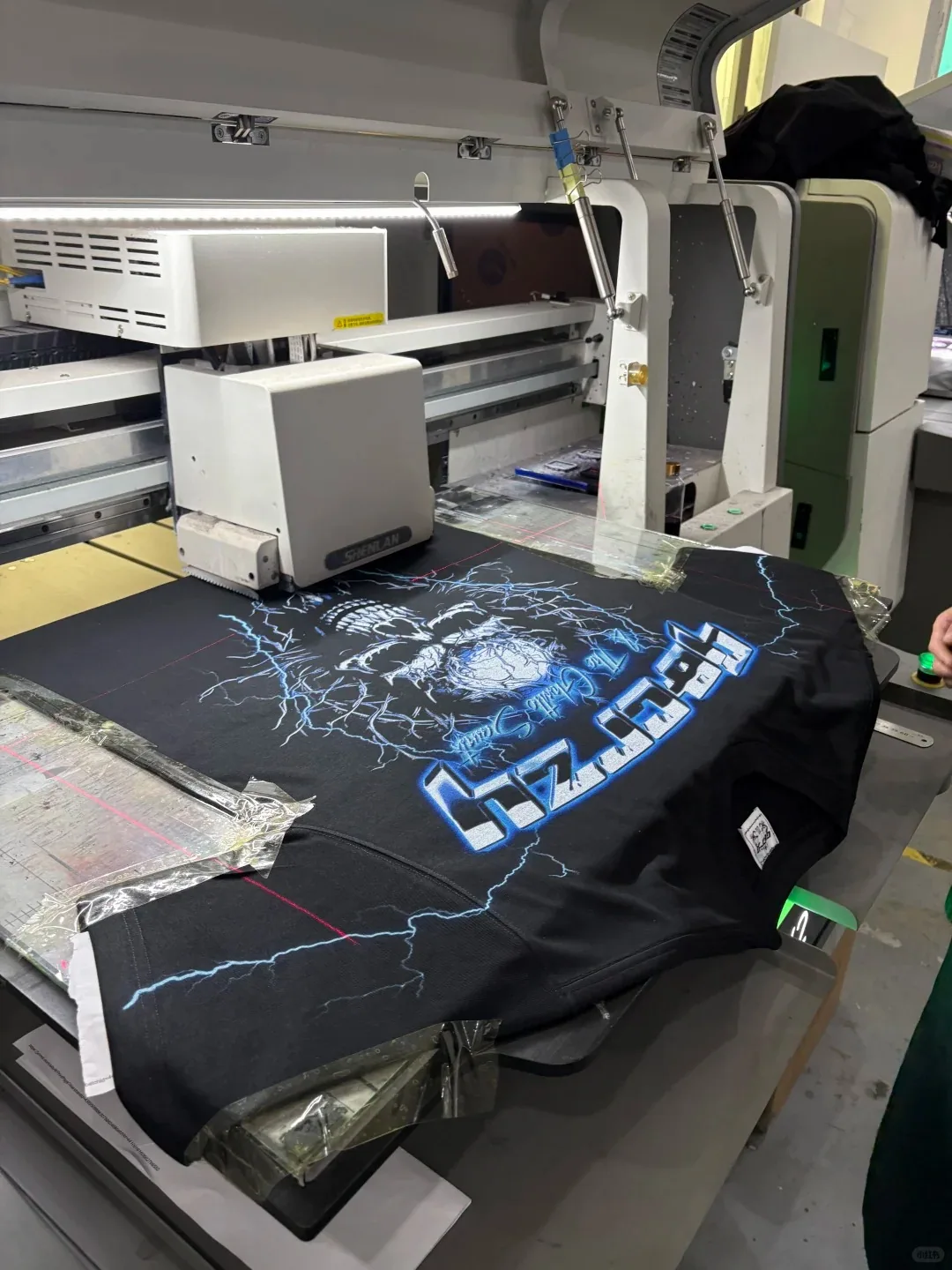

Silicone toothbrush printing creates a raised, dot-textured surface for garment graphics. The name describes the brush-like appearance of the decoration, not a dental product. For a streetwear brand, the useful question is whether that texture works with the logo, garment fabric and intended placement.
This guide uses Eking’s own sample photographs to show the appearance of the effect and gives buyers a practical brief for sampling. The photographs show texture and lettering; they do not establish fabric composition, print height, wash-test results or production specifications.

What Is Silicone Toothbrush Printing?
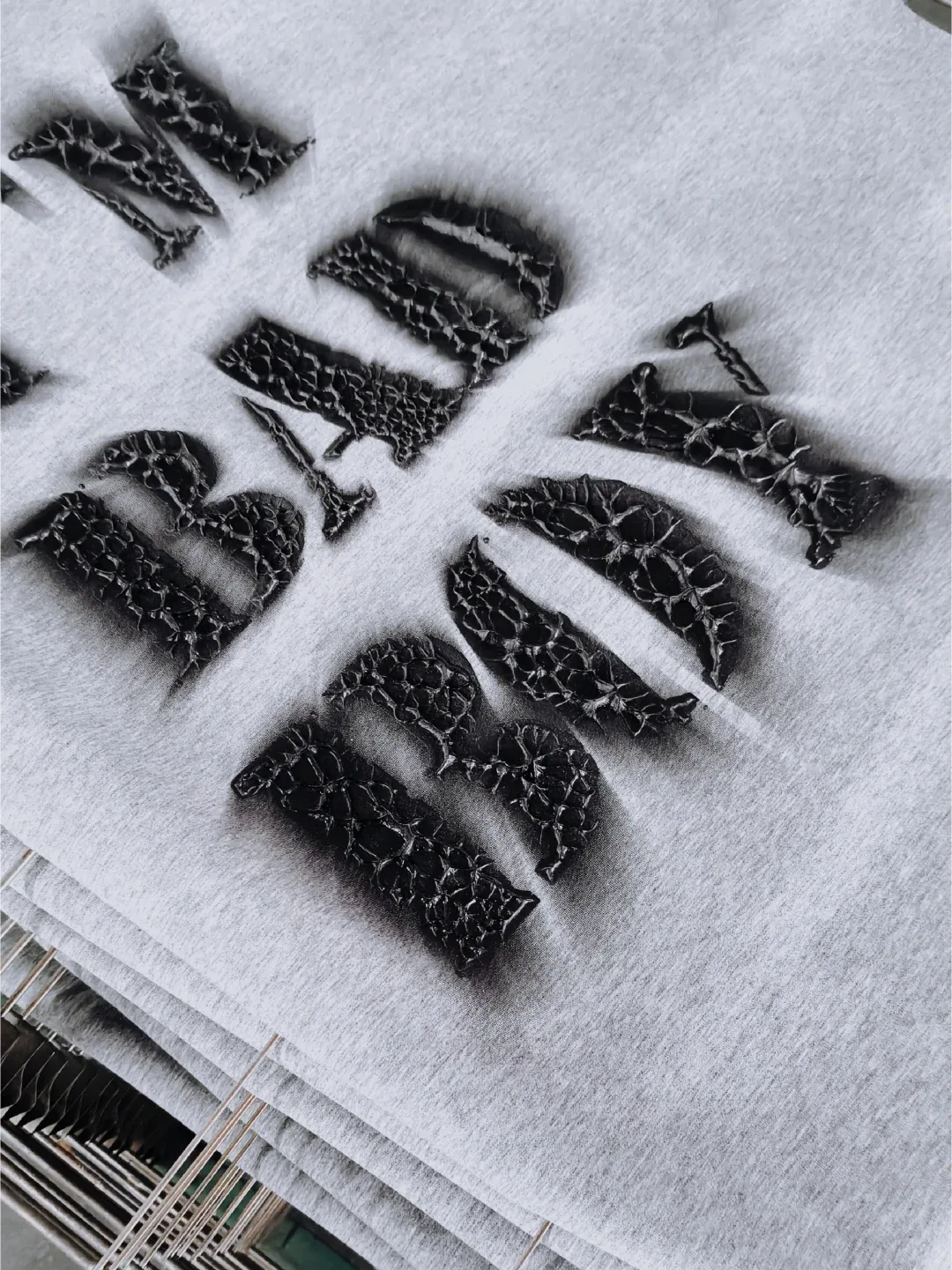
In this sample, the graphic is built from many small raised points rather than one smooth, solid surface. Their repeated arrangement gives the letters a granular, brush-like texture. Viewed from an angle, the points catch light and make the relief easier to see.
Suppliers may describe related effects as toothbrush silicone printing, brush-dot silicone or textured 3D silicone printing. A name alone is not a complete specification. Ask whether the proposed construction is printed directly onto fabric or made as a separate transfer or label, and approve the actual sample rather than assuming these routes are interchangeable.
Silicone-based textile printing is a broader family of decoration processes. CHT’s silicone print-paste information describes different formulations and finishes, while XG Silicone’s toothbrush-effect example illustrates the more specific texture. These sources explain the process category; they do not identify the materials used in the Eking sample.
What the Sample Photographs Show


Use these views to discuss texture density, letter spacing and contrast. To judge the final garment, also request a full placement view with a scale reference. A close-up cannot tell you how large the graphic is or how it sits on a finished T-shirt or hoodie.
Choose the Effect Around the Artwork
Lettering and Negative Space
Start with the final artwork dimensions, not only a logo file. Check the smallest strokes, gaps inside letters and spacing between characters on the sample. If details merge or become difficult to read, review a larger graphic or a simplified version before approving production.
Placement and Wearing Comfort
Compare a small chest mark, sleeve detail and larger graphic as separate design choices. Inspect how the decorated area feels when the garment bends and how it sits near seams. Do not approve a large application using only a tiny swatch photograph.
Fabric and Finishing
Request the trial on the intended fabric and colour. Include any planned garment washing or finishing in the brief, and confirm the production sequence. If you are choosing a base garment, review our custom T-shirt development options or custom hoodie sampling options alongside the decoration.
Compare Texture, Not Just the Word “3D”
- Toothbrush-textured silicone: use a close-up to agree on the repeated dot pattern, then check the complete graphic at its intended size.
- A smooth raised silicone graphic: ask for a separate sample if you want a continuous surface rather than the granular appearance shown here.
- A flat printed graphic: compare it when artwork readability and a less dimensional appearance are your priorities.
- Embroidery: review a stitched sample when you want a thread-based appearance. A brush-like silicone texture should not be described as embroidery.
There is no universal winner on price, comfort or durability. Compare the same artwork size and fabric, and ask each quotation to state the construction and testing scope. Our garment printing methods overview can help you build a shortlist; this guide focuses on the toothbrush texture.
A Sample Approval Checklist for Brands
- Confirm the construction. Record the material description and whether the graphic is a direct print, transfer or separate label.
- Check the artwork. Compare letter shapes, spacing, colour and position with the approved design.
- Inspect the texture. Look for unintended gaps, merged points, irregular edges or differences across the graphic.
- Handle the actual sample. Review the feel and the garment’s movement; photographs cannot establish softness or comfort.
- Agree on care and testing. Specify the intended wash method and acceptance criteria, then request results for the actual fabric-and-decoration combination.
- Keep an approved reference. Save the sample version, artwork, fabric details and written approval for comparison with production.
Claims such as “washable,” “skin-safe” or “will not peel” need applicable evidence. An attractive texture photograph is not a chemical-safety report or a durability test. Likewise, an ink supplier’s data does not automatically verify every finished garment.
What to Send for a Silicone Print Sample Review
Send your logo or artwork, intended garment type, fabric details if known, decoration width and height, placement, colour requirements, planned quantity by style and colour, destination and required date. Add a reference photograph and say which feature matters most: the granular texture, the height, the outline or the overall contrast.
Ask the quotation to separate sample development, any setup or tooling, garment production, decoration and shipping where applicable. Minimum quantities, per-colour conditions and timing need confirmation for the specific project; this sample does not establish a universal MOQ or delivery promise.
Frequently Asked Questions
Is Toothbrush Silicone Printing the Same as Embroidery?
No. This guide describes a silicone decoration with a brush-like surface. Embroidery uses stitched thread. Use a sample and construction description to make sure everyone is discussing the same effect.
Can I Use This Effect on a T-Shirt or Hoodie?
Include the intended garment and fabric in a sample request. The appearance shown here is a reference, not proof that the same result will work on every T-shirt, hoodie or fabric finish.
Can a Photograph Confirm Wash Durability?
No. Request an agreed care procedure and relevant testing of the finished sample. Record the method and results rather than relying on a general “wash-resistant” description.
What If I Only Have a Reference Image?
Use it to explain the desired texture, but supply your own artwork or confirm permission to reproduce the design. A reference photograph alone does not provide production-ready dimensions or artwork rights.
Discuss Your Streetwear Graphic with Eking
Send your artwork and garment brief for a sample review. Include the toothbrush-texture reference and any undecided specifications so we can review the project scope before confirming a sample plan.