
Foil printing gives a shirt a reflective surface by transferring a decorative foil layer onto prepared adhesive areas. For clothing brands, the important decisions are the intended finish, artwork, garment fabric, print position and sample approval, not simply whether the effect is called gold or silver.
This guide covers foil decoration for garments. It does not cover foil stamping on paper, and it does not treat metallic ink, glitter printing or every metallic heat-transfer film as the same process.
Planning a metallic graphic? Send Eking your artwork, garment details and finish reference so the proposed construction and sampling requirements can be discussed.
What is a foil print shirt?
A foil print shirt has selected areas decorated with a transferred foil finish. One textile method screen-prints an adhesive design onto the fabric before applying foil; another uses a prepared adhesive transfer. The foil layer follows the areas prepared for bonding.
These are product-specific systems, not one interchangeable recipe. International Coatings describes textile foil adhesive in its Foil Adhesive 1801 guidance, while Transfer Express explains an adhesive-transfer and foil application method. The instructions differ, which is why a buyer should not impose a generic internet temperature or pressing time on a different system.
Specify the finish before approving the artwork
“Gold print” is incomplete as a production instruction. Ask for a physical finish reference and identify the effect you want:
- A relatively solid reflective graphic.
- A deliberately broken or distressed pattern.
- Small metallic accents within a larger printed design.
- A particular shade or surface appearance, subject to the available foil system.
A screen image cannot fully describe a reflective surface. Review the sample under more than one lighting angle and distinguish intended texture from missing transfer. If broken coverage is part of the artwork, agree which areas are intentional.
Foil finishes are not limited to gold
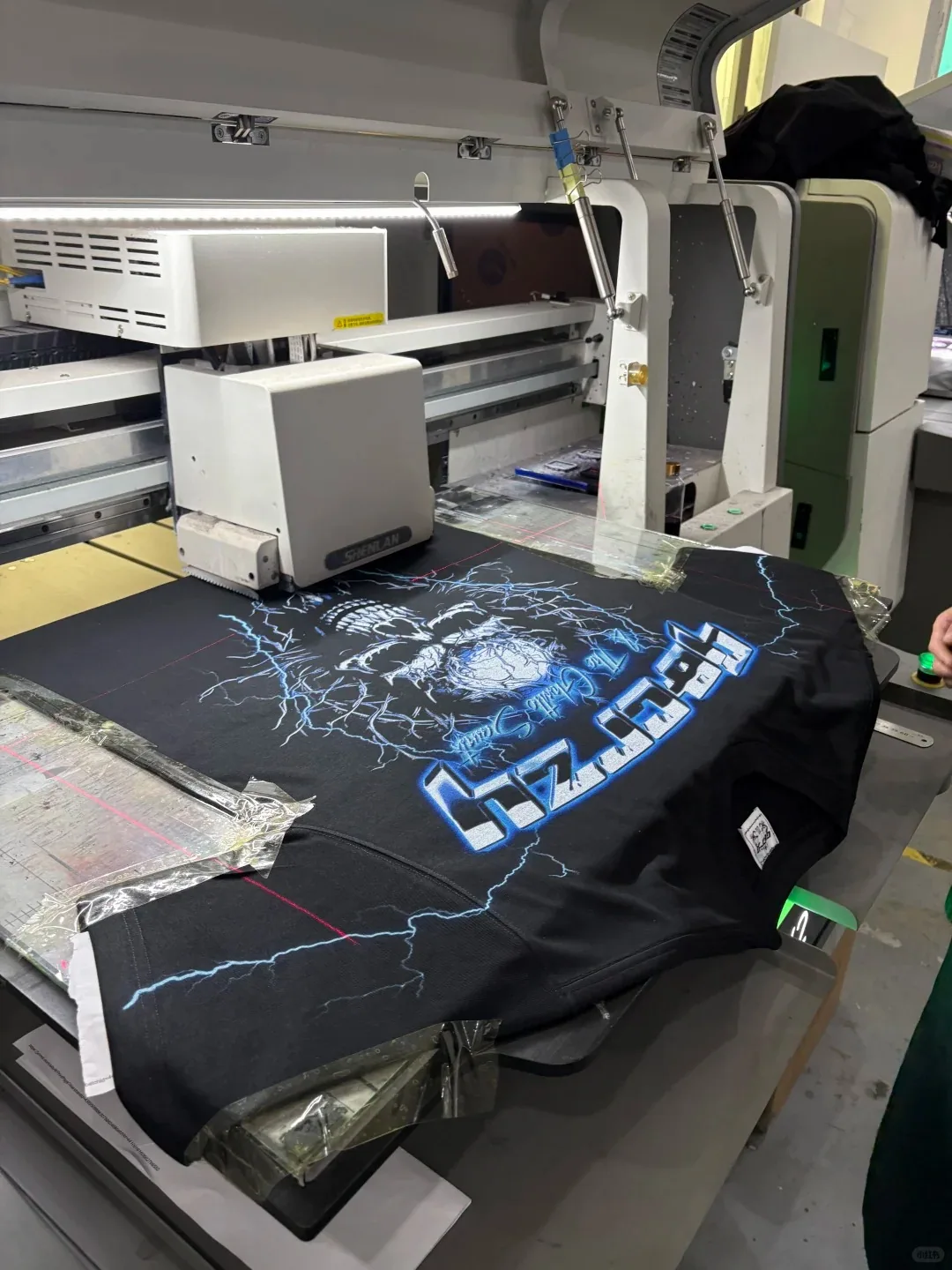
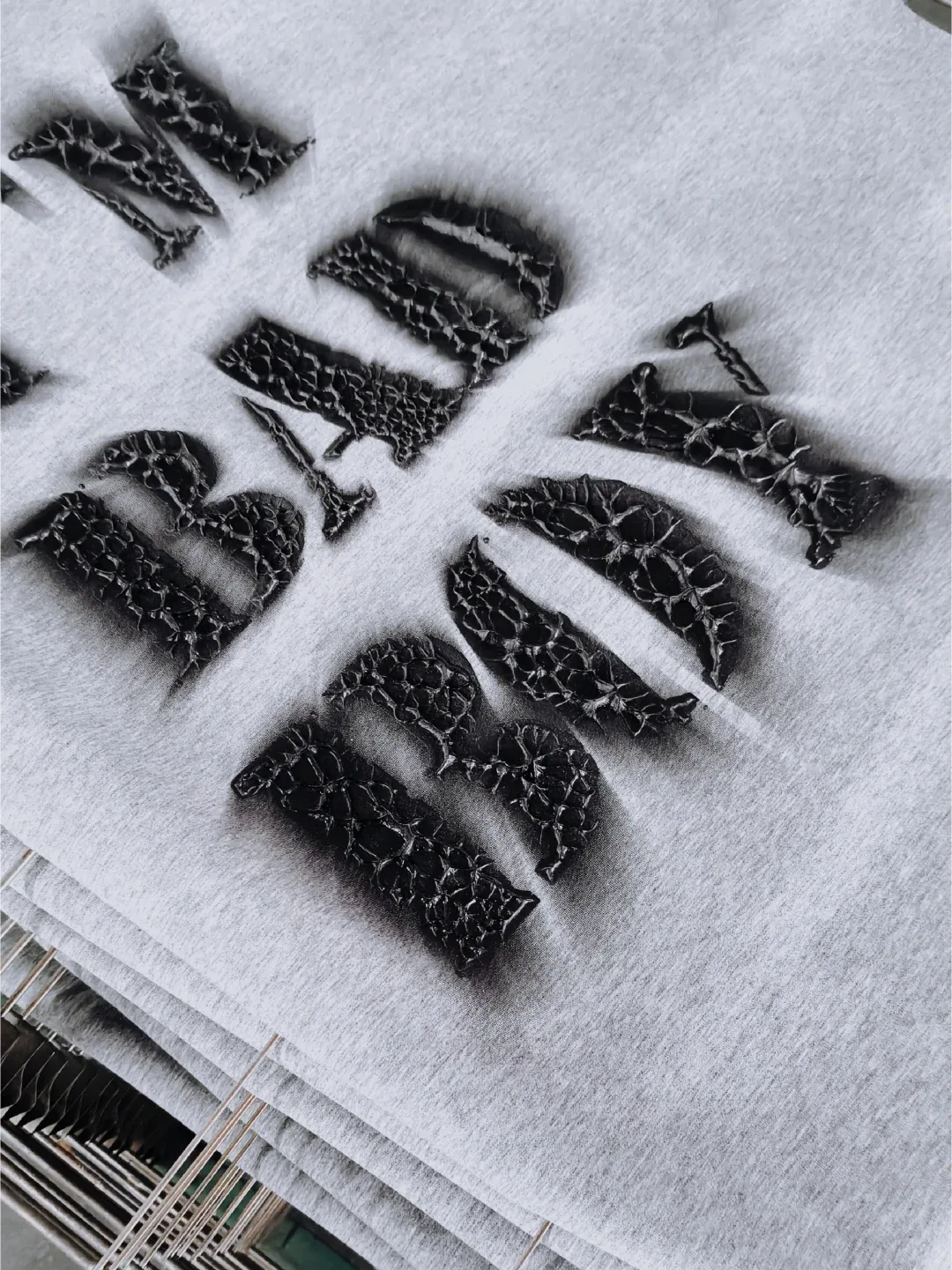
The supplied garment references below show gold-colored and purple foil finishes on different base colors. Some surfaces appear finely textured or speckled; others look more continuous. Use a close-up to brief that appearance, but confirm the actual foil and adhesive system separately.
Ask for the same finish on your intended garment color before approval. These photos illustrate appearance, not a controlled comparison of the same material under identical lighting. A sparkling surface alone does not establish whether another sample uses foil, glitter ink or a different transfer construction.


Visible lettering is shown as a decoration reference only. It does not imply a partnership with, or endorsement by, a brand or organization.
Foil, metallic ink and glitter are different specifications
| Option | What to clarify | What to approve |
|---|---|---|
| Transferred textile foil | Foil product, adhesive system and how the design is transferred. | Reflective appearance, coverage, edges, bonding and care result. |
| Metallic ink | The actual ink and the surface effect it produces. | A printed sample; do not expect it to match a foil reference automatically. |
| Glitter printing | The intended sparkle, texture and print construction. | The real surface and handle, rather than a substitution described only as “shiny.” |
| Metallic heat-transfer film | Whether it is a cut film, printed film or another transfer system. | The specified film’s edge, thickness, stretch behavior and care requirements. |
The right choice depends on the visual effect and use of the garment. There is no need to force every reflective design into foil if another tested construction better matches the brief. Use our garment printing methods comparison when reviewing alternatives for the same artwork.
Check the actual fabric and finished garment
Fabric composition is one input, not a complete approval. Include the knit structure, surface, color and any garment treatment in the sample brief. The intended adhesive and foil system must be suitable for that combination.
Do not assume a successful cotton sample establishes suitability for every blend. For example, International Coatings lists cotton and some cotton/polyester blends for the specific adhesive linked above. That is a product scope, not a claim that every foil system supports the same fabrics.
For washed, dyed or otherwise finished garments, identify when decoration happens in relation to those treatments. Approve the production sequence on a representative sample, rather than checking the foil on an unrelated blank.
If the design crosses a seam, pocket or other raised area, show that construction in the placement drawing. Ask the decorator to confirm feasibility before treating a flat mockup as production-ready. The T-shirt print size and placement guide explains how to document the intended position and size range.
Prepare a foil-specific artwork brief
Provide the artwork at its intended physical size and clearly identify the foil areas. Keep other print colors or processes on separate, labeled layers where practical. The factory needs to know which surfaces should bond, not just what the overall mockup looks like.
Confirm:
- Finished width and height, units and design revision.
- Solid foil coverage versus deliberately distressed coverage.
- Small lettering, thin lines and gaps that must remain visible.
- Foil finish reference and garment color.
- Placement measured from agreed garment reference points.
- Any adjacent embroidery, print, seam, label or trim.
Ask for an actual-size sample of the most difficult detail. Avoid approving a large, simplified test when the production logo will be smaller and more intricate.
Approve the sample in two stages
1. Inspect the initial result
Review the garment flat and in a worn position. Check the outline, registration, intended coverage and the appearance at different angles. Look for unintended gaps, visible adhesive outside the design, loose edges or unacceptable changes to the garment surface.
Handle the decorated area to assess whether the result suits the garment’s intended use. Document the approved appearance with a physical reference and photos; photos alone are limited for reflective materials.
2. Evaluate the agreed care procedure
Record the method, drying conditions, number of cycles and acceptance criteria before comparing results. Inspect coverage, edge bonding, cracking and the underlying garment afterward. A result from one system or fabric is not a durability promise for another.
The adhesive manufacturer’s care guidance may be more restrictive than the garment’s usual care. International Coatings recommends gentle care and avoiding direct ironing of its foil print. Final care instructions should reflect the complete, tested garment and the actual decoration system, not a universal rule copied from this article.
What affects the quotation?
Ask the supplier to price the same physical design size, decorated positions, foil effect, base garment and order quantity. Confirm whether artwork preparation, adhesive printing, foil application, sampling and any additional decoration are included.
If comparing a stock garment with a fully developed T-shirt, separate the garment cost from the decoration work. A quote for a small chest mark cannot be used as a reliable estimate for a large front graphic or a mixed-process design.
Foil Print Shirt FAQs
Does foil printing only come in gold?
No. The references in this guide include both gold-colored and purple foil. Specify the required color, surface appearance and garment base, then confirm the available system and approve a physical sample.
Is gold foil the same as gold screen-printing ink?
No. The appearance and production method can differ. Show the finish you want and ask the supplier to identify the proposed system before sampling.
Can foil printing be used on dark T-shirts?
Some textile foil systems support light and dark fabrics. Confirm the exact system and approve it on the actual garment color; do not infer compatibility from the foil color alone.
Can foil be combined with another decoration?
A mixed-process design needs a defined sequence and a combined sample. Approving each decoration separately does not establish how they behave together during production or care.
How many washes will the print last?
There is no defensible universal number. Agree on a care test and acceptance criteria for the specific fabric, adhesive, foil and production sequence. Any durability claim should match those results.
Build a brief for your foil print shirt
Send the artwork, finished print size, foil appearance reference, garment type and fabric, base color, placement, quantity and intended care requirements. State whether you need a decorated stock garment or a custom-developed T-shirt.
Send Your Metallic Print Brief and ask for the proposed process to be confirmed before sample development.