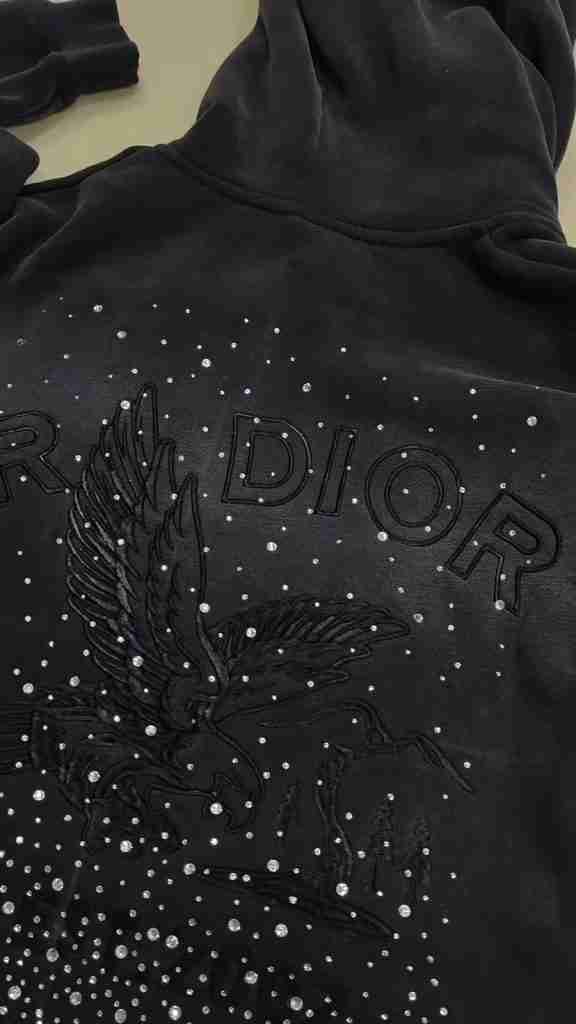
Embroidery and rhinestones on hoodies combine two different visual effects: stitched texture and light-reflecting detail. They can work in the same design, including on a finished blank hoodie, but the artwork, embroidery access and hotfix application must be planned together. A good-looking decoration sample is the starting point, not proof that every hoodie fabric will behave the same way.
A Hoodie Example: Tonal Embroidery With Rhinestone Highlights
The reference below uses dark embroidery on a dark hoodie, with reflective stones scattered around the lettering and bird motif. The thread gives the artwork its shape and surface texture; the rhinestones add points of contrast without filling every part of the design. The source note identifies the stitch technique as flat embroidery and the stones as glass hotfix rhinestones.
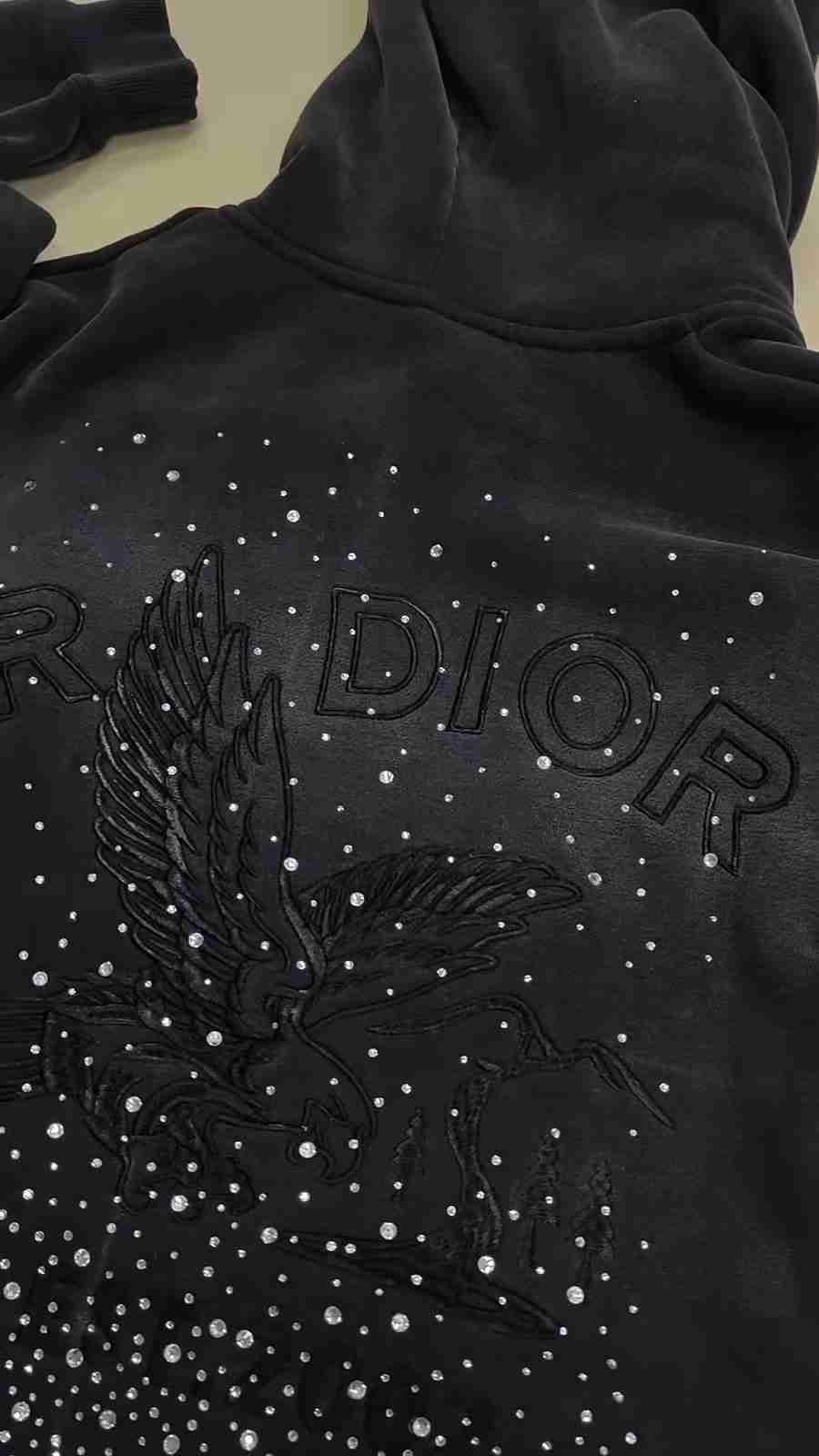
The reference contains third-party branding. It illustrates decoration techniques, not a brand partnership or an offer to reproduce the displayed trademark. Send your own artwork or a design you are authorised to use.
Watch the Embroidery and Finished Decoration
During the embroidery section, the machine builds the stitched design while the garment is held in a frame. The finished view then shows the rhinestones distributed across and around the motif. The video is useful for reviewing appearance, but it does not establish the adhesive specification, production settings or a wash-performance result.
Separate the Stitch Artwork From the Rhinestone Layout
Prepare one coordinated design with separate information for each process. A single flattened image can communicate the overall look, but it is not a complete production instruction.
- Embroidery layer: identify stitched outlines, filled areas, thread colours and the finished width and height. Digitising should reflect the actual fabric and design size.
- Rhinestone layer: identify stone positions, sizes, colours and whether the layout is a fixed pattern or a controlled scatter. Different stone sizes should be distinguishable in the placement file.
- Shared placement: use the same garment reference points for both layers. Record the relationship to the neckline, centre line, zipper or pocket.
- Protected areas: show where stones must not cover small letters, essential linework or hardware. If stones are intended to sit on stitched areas, test that exact surface rather than assuming the bond will behave like bare fabric.
For file preparation, see our embroidery file types guide. If your starting point is only a screenshot, review the artwork preparation service before treating the image as a stitch file or stone-placement template.
Can You Add Both Processes to a Finished Hoodie?
Yes, when the garment construction and materials allow it. Check whether the embroidery area can be framed without trapping another garment layer, and whether the decoration remains accessible for rhinestone application. A placement that is straightforward on an open panel may be more difficult after the hoodie is assembled.
A zipper, bulky seam or pocket can also change how the application surface is supported. Review the decorated area with the garment laid flat and in its normal worn shape. For a zip hoodie, approve the design with the zipper closed as well as checking that the garment still opens and closes normally.
Do not select the fabric by weight alone. Composition, stretch, surface treatments and the complete decoration build-up matter too. The embroidery backing, thread and rhinestone adhesive need to be evaluated as one finished assembly.
Plan the Application Order and Check the Whole Surface
Agree the process sequence during sampling. Embroidering first can keep the needle and frame away from stones that have already been applied, but the later heat and pressure must still be checked for their effect on the stitching and garment. Do not turn that sequence into a universal rule for every design and machine setup.
Hotfix rhinestones use a heat-activated adhesive layer. The required application conditions depend on the selected stone system, fabric and equipment. Preciosa’s Hotfix application manual highlights material testing and particular care around zippers, seams and other raised areas. It is a general technical reference here, not evidence that the stones in this video are Preciosa products.
Use the instructions for the actual materials selected for your order, then record the settings that pass the sample checks. Do not copy a temperature, pressure or time from a social video and assume it applies to a different hoodie.
What to Approve Before Bulk Production
- Stitch quality: inspect the outlines, filled areas, small details, loose threads and visible puckering after the garment is released from the frame.
- Stone placement: compare the position, spacing and size mix with the approved layout. Check that stones do not hide important artwork or interfere with hardware.
- Application appearance: look for excessive adhesive around stones, pressure marks, surface shine or changes to the embroidered area.
- Reverse side and comfort: review backing edges, loose thread ends and how the decorated area feels against the body.
- Attachment and care: allow the specified adhesive curing period, then assess attachment and washing under agreed conditions. Record missing stones, lifted edges, thread changes and fabric distortion.
- Approval record: retain the approved garment, artwork revision, material references and inspection criteria. A close-up photograph alone is not a complete bulk-production standard.
Use the clothing quality control checklist to connect decoration approval with the rest of the garment inspection. Any wash-life claim or care label should be supported by the agreed materials and test results, not inferred from the sparkle in the video.
Questions Brands Often Ask
Is this the same as rhinestone embroidery?
Names can be ambiguous. In this example, thread embroidery and hotfix rhinestone application are separate parts of a combined design. Specify the actual attachment method; a sew-on stone, a mechanically fixed embellishment and a hotfix stone are not interchangeable.
Can stones be applied directly over the embroidery?
Do not assume that every stitched surface is suitable. Raised or uneven areas change the contact surface. Test the chosen stone, adhesive and stitch construction together, or leave a defined fabric area for the stone layout.
What information is needed for a quotation?
Send the hoodie type, size range, fabric details if known, artwork, decoration dimensions, placement, stone specification and order quantity. Clarify whether you need garment production as well as decoration. Confirm the sampling plan and applicable minimum order after those details have been reviewed.
Develop Your Own Embroidered Rhinestone Hoodie
Send Eking Clothing your authorised artwork and show which elements should be stitched and which should use rhinestones. Include a placement reference and indicate whether the project uses finished blanks or newly produced garments, so the sample review can address access, appearance and material compatibility from the start.
Discuss your hoodie embroidery and rhinestone project
Video reference: the original embroidery and rhinestone hoodie demonstration, reproduced with permission.